Last updated November 22, 2026
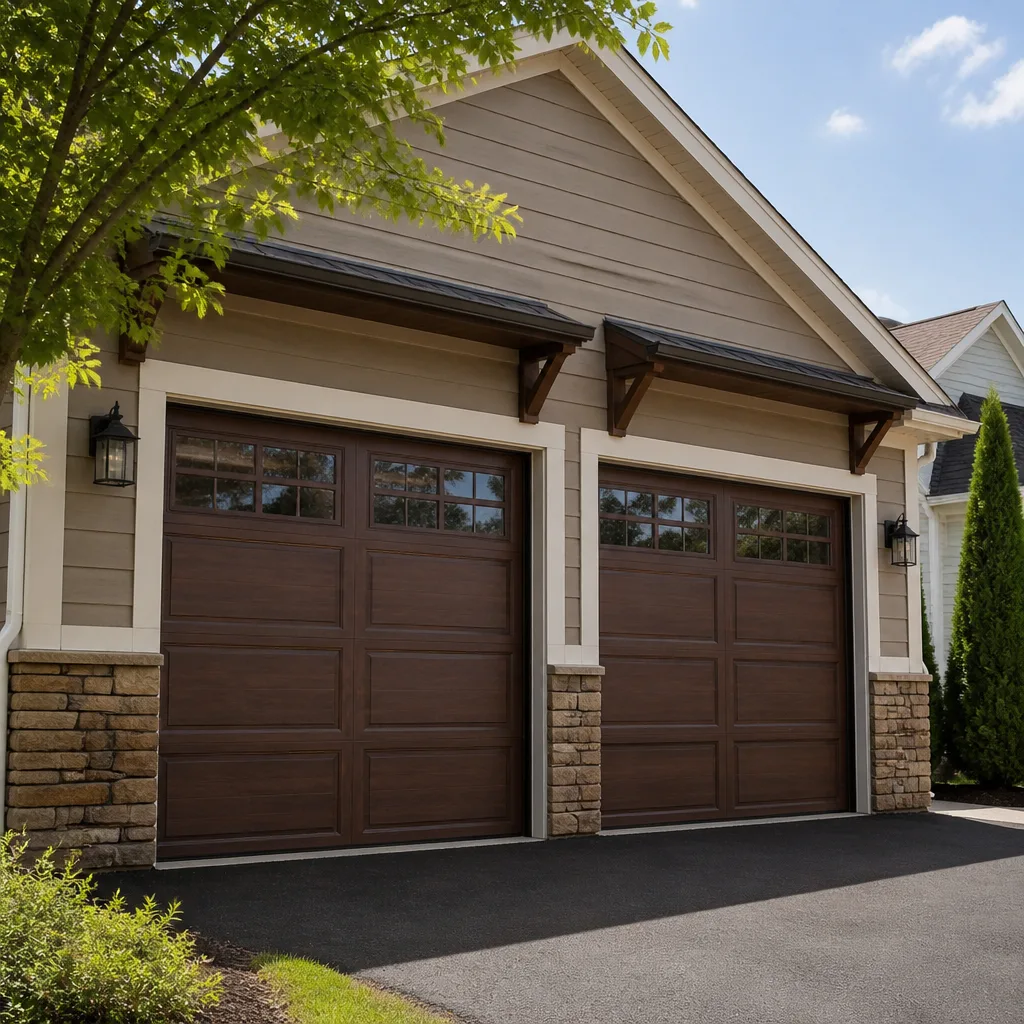
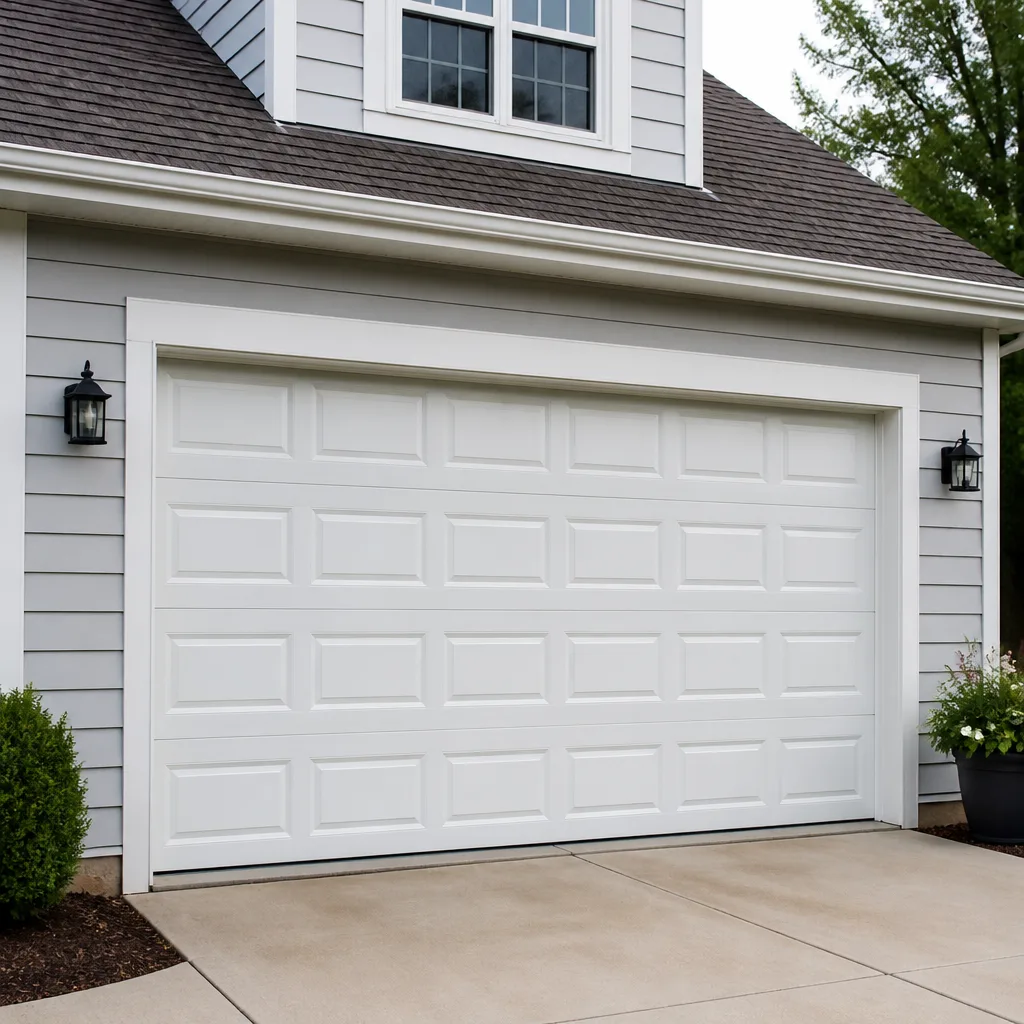 Raised-panel steel
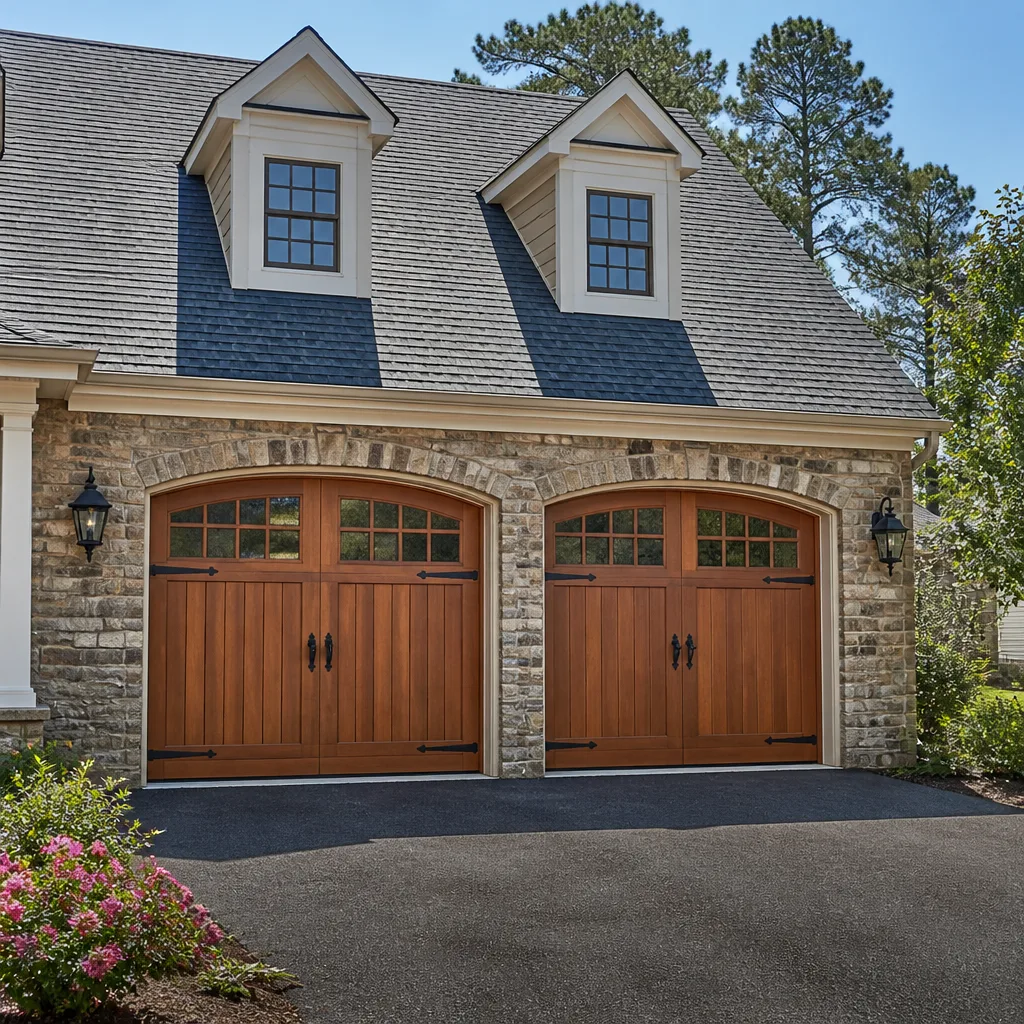 Carriage house
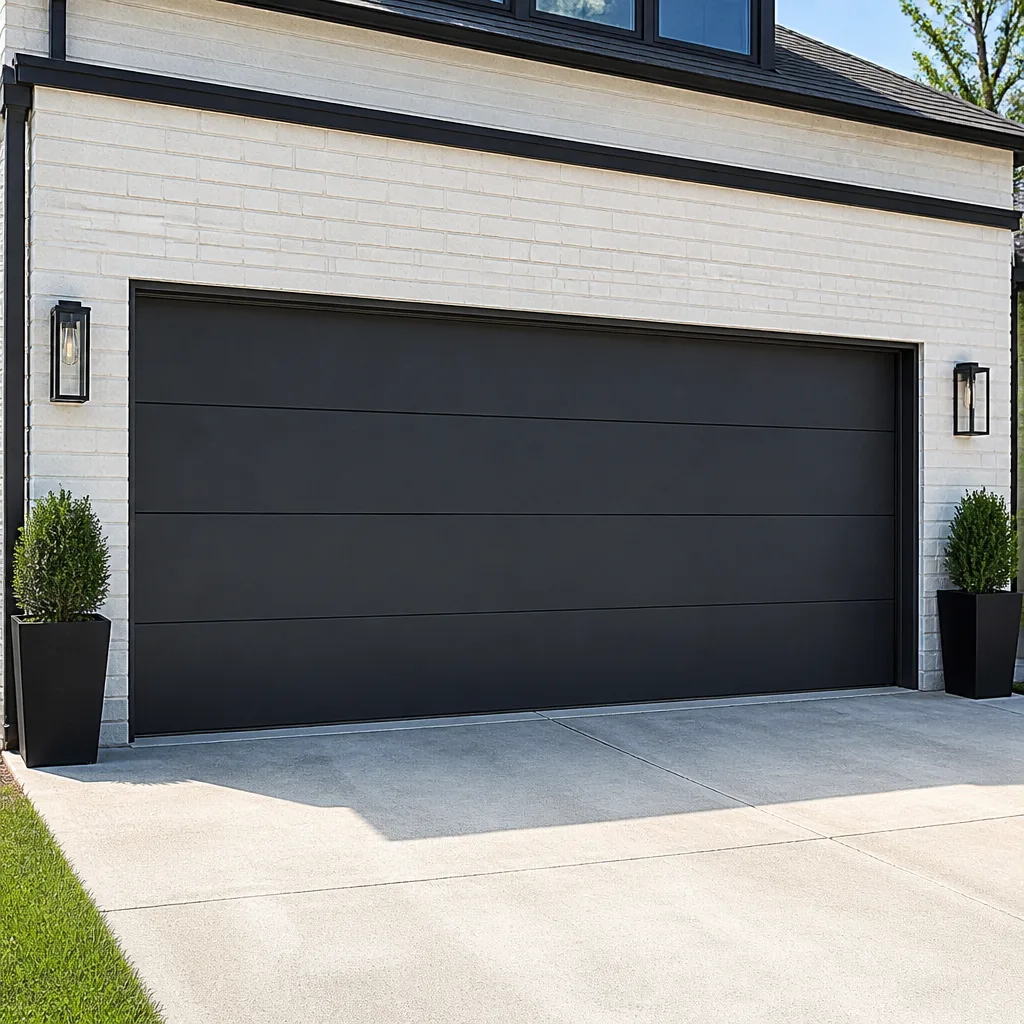 Modern flush
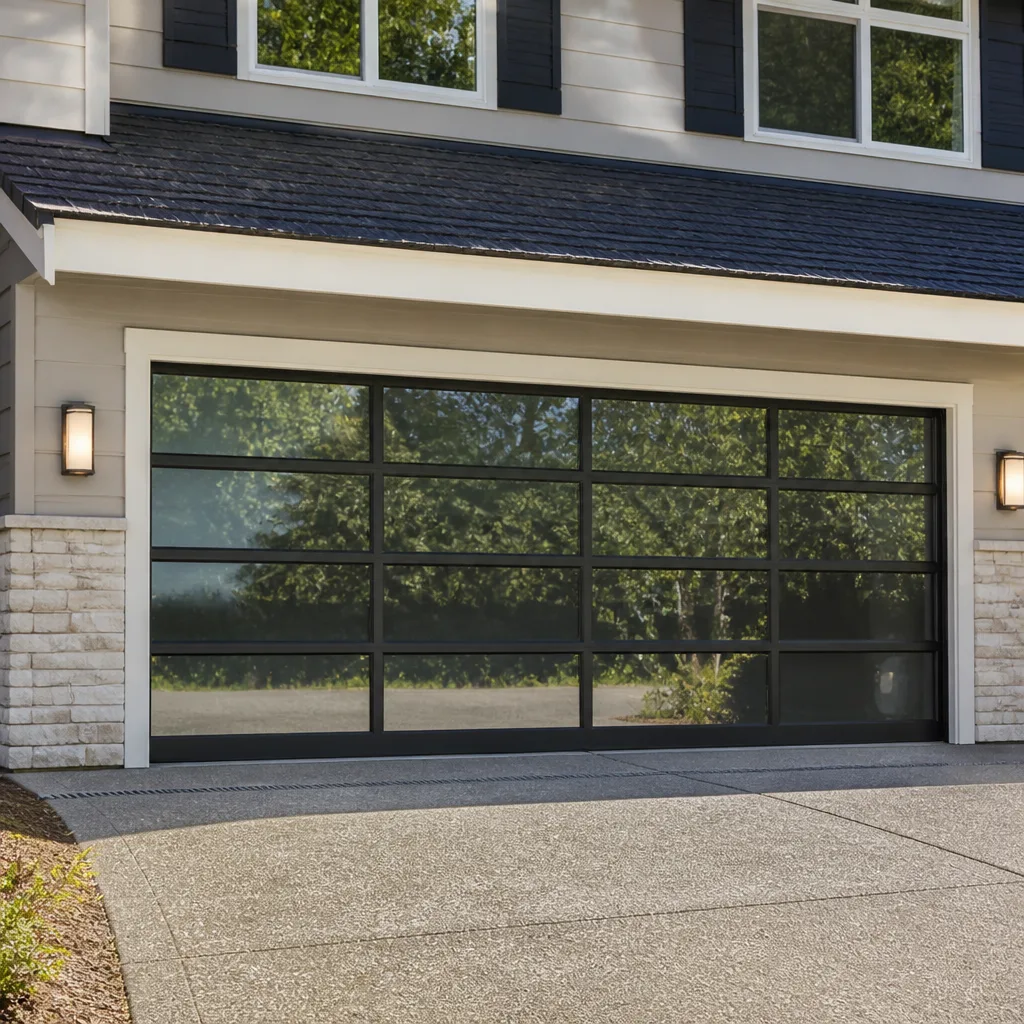 Full-view glass
 LiftMaster openers
 Chamberlain openers
Full 25-point door and opener safety check with every visit - springs, cables, rollers, tracks, and your LiftMaster or Chamberlain opener included
You get a price before we start. It does not change when the pro arrives.
Get your free estimateGarage Door Warning Signs: An Orland Park Homeowner’s Reference Guide
A garage door that hesitates for two seconds before it rises isn’t just annoying. It’s usually a torsion spring telling you it has lost enough tension that one cold Orland Park morning it may not lift the door at all, and your car stays parked inside until someone fixes it. Most door failures work that way: they announce themselves weeks ahead with a narrow set of sounds, sights and small behavior changes. The trick is reading those clues correctly. This guide decodes the symptoms, separates a door that’s safe to use from one you should stop touching today, and shows you the handful of checks you can do safely in your own driveway.
Quick Answer
The main garage door warning signs are a door that moves slowly or hesitates, a loud bang from the spring area, grinding or scraping sounds during travel, a door that reverses before closing, and visible fraying or slack in the cables. These symptoms fall into three buckets: stop using the door now (dangerous), schedule service within about two weeks (wearing out), and monitor until your next maintenance visit (minor).
Styles & brands we work with
- Raised-panel steel
- Carriage house
- Modern flush
- Full-view glass
- LiftMaster openers
- Chamberlain openers
Table of Contents
- The Symptom-to-Cause Reference: What Each Sound Is Telling You
- Visual Warning Signs: The Door, the Opener, the Hardware
- Urgent, Soon, or Eventually: Sorting Your Warning Signs
- The 30-Second Safety Reversal Test
- What a Fraying Cable Looks Like Before It Snaps
- Why Orland Park Winters Make These Warning Signs Louder
- How to Photograph a Problem and Send It to a Technician
- Keeping a Simple Door Log
The Symptom-to-Cause Reference: What Each Sound Is Telling You
Garage doors don’t make random noises. Each sound comes from a specific component, and once you can name the part, the noise stops being vague. Here’s how we map what homeowners describe to what we actually find when we arrive at a home in Orland Park.
- A single loud bang, followed by the door refusing to lift. That’s almost always a torsion spring breaking. The bang is the spring releasing its stored energy in one motion. Stop operating the door and call for garage door spring repair.
- Grinding or whining while the door travels. Usually worn rollers or a dry, worn torsion tube bearing. It gets louder over weeks, never quieter on its own.
- Popping or clicking at one spot in the travel. Often a roller jumping its track or a hinge that’s working loose. Left alone, the hinge can pull free and jam the door mid-travel.
- Scraping along the floor or frame. The door is out of alignment or a bottom bracket has sagged. Scraping means metal is grinding metal, and it will wear through the finish fast.
- A rattling door that still opens fine. Loose bolts on the hinges and brackets. Cheap to fix, and quiet to live with once it’s tightened.
- Clicking from the opener with the door not moving. The opener is trying to engage a door that’s stuck or a stripped gear inside the unit. This is where garage door opener repair comes in.
What you hear narrows down what we examine first when we pull up. A single bang points us straight to the spring area. A grinding noise sends us to the rollers and bearings. A rattle sends us to a torque wrench on the hinge bolts. Naming the sound correctly can save a lot of diagnostic time and, in our experience, gets the right part ordered on the first visit.
Visual Warning Signs: The Door, the Opener, the Hardware
Sounds aren’t the only clues. A lot of early warning lives in what you can see with the door closed and the opener unplugged. Split your inspection into three zones so nothing gets missed.
On the door itself
- Gaps between sections that weren’t there before, or panels that look slightly out of line.
- Rust streaks along the bottom edge, common after an Illinois winter of road salt tracked into the driveway.
- Dents or bowing in a steel panel, which can bind the door against its tracks.
- Wood doors with peeling paint or a splitting bottom rail – paint is the weather barrier on wood, and once it fails the wood soaks up water.
On the opener and its rail
- A bent, sagging, or visibly bowed opener rail.
- Frayed or bulging drive belt on belt-drive units.
- A safety sensor lens that looks cloudy, cracked, or blocked by a stored item.
- An opener that lights up and hums but doesn’t move the door.
On the hardware
- Rollers with flat spots or cracked nylon wheels.
- A track with a visible kink, bow, or separation at a joint.
- A torsion spring with a visible gap in the coil; a broken spring is easy to spot if you know to look up.
- Cables that look slack, looping, or unwound from their drum.
If you own a Clopay, Amarr, or Wayne Dalton door, note the brand and model name before you call. Those three come up often on Orland Park homes, and knowing what we’re dealing with before the visit helps us carry the right rollers, hinges, and brackets. Whatever the brand, the visual check works the same way: door first, opener second, hardware third.
Urgent, Soon, or Eventually: Sorting Your Warning Signs
Not every warning sign is a same-day emergency. Sorting them into three buckets keeps you from overreacting to a rattle and underreacting to a broken spring.
Urgent – stop using the door now
- A broken torsion spring or extension spring. The door is now held by the opener alone, and the opener isn’t rated to lift it.
- A snapped or visibly unraveling cable.
- A door hanging off one track, with the rollers out of the channel.
- A door that has come down unevenly and won’t close flush, or that looks off-level from the street.
- Any door that reversed on its own, closed on an object, or fell.
For these, disconnect the opener (usually the red release cord) and leave the door alone. Do not try to lift it by hand. High-tension springs and cables hold enough stored energy to injure someone badly. If the door won’t stay secure, that’s what our emergency service is for, and calling us at 7 a.m. or 11 p.m. is the right move.
Soon – schedule within about two weeks
- Grinding or squealing that has been present for more than a few days.
- A door that reverses on the way down but can be coaxed through by holding the button.
- Loose hinges, a grinding roller, or a noisy opener rail.
- An opener that works intermittently or runs past its limit.
Eventually – monitor at next maintenance
- A light rattle from a few loose bolts.
- Cosmetic rust on the bottom edge.
- A sensor lens that’s dirty rather than broken.
- Mild cosmetic dents that don’t affect the door’s travel.
Sorting first means you don’t panic over a rattle, and you don’t ignore a broken spring. Most of the Orland Park calls we take fall into the “soon” bucket. Catching them there is what keeps the job from turning into a full replacement.
The 30-Second Safety Reversal Test
Every automatic garage door sold in the US since 1993 has had a safety reversal feature, and most homeowners have never tested theirs. The test is quick and safe to do from the ground.
- Open the door fully, then close it so it rests about a foot or two above the floor.
- Place a roll of paper towels or a piece of scrap wood flat on the floor directly under the door’s leading edge.
- Press the opener button to close the door.
- Watch the door. When it touches the object, the door should reverse and go back up.
Repeat the test with the safety sensors: open the door, then wave a hand or a broom handle across the sensor beam while the door is closing. The door should stop and reverse immediately. If either test fails, the door’s reverse is not working, and that’s an urgent call – not a “soon” one. A door that ignores an obstruction is one of the few genuinely dangerous household conditions we see. Rather than endorse a fix-it-yourself approach on the safety circuit, get it checked by a trained technician who can verify the whole system.
Run this test once a season, and always before a long stretch when the house will be empty. A failed reversal is invisible until something is under the door, so the test is the only way to know.
What a Fraying Cable Looks Like Before It Snaps
Cables wear in a warning pattern, and if you know the pattern you can catch a failing cable weeks before the snap. A garage door cable is a bundle of thin steel strands wound tight. When a strand breaks, the cable doesn’t snap instantly; it starts to flatten and shed the broken strands, and that’s what you can see.
- A “fuzzy” look along one section of the cable – broken strands sticking out sideways.
- A kink or a birdcage (a bulging, unwound section) near one end, usually where it wraps the drum.
- Slack on the bottom bracket side, meaning the cable has already relaxed past the point of tension.
- Rust streaks running down the cable or drum, meaning moisture has gotten inside the strands.
If you see any of these, do not touch the cable. A tensioned cable under load can recoil with serious force. Do the visual check from arm’s length or further, then call for a technician. On most Orland Park homes the cables are on the outside of the door and easy to see with the door closed. Have a look at both sides, not just the one facing the street.
A cable that reaches the “fuzzy” stage is living on borrowed time. Replacing both cables as a set is standard practice on a door that has one visibly failing; a matched pair keeps the tension balanced across the door.
Why Orland Park Winters Make These Warning Signs Louder
Garage door problems cluster around the seasonal swing, and Orland Park sits right in the middle of a cold, freeze-thaw climate that stresses metal components all winter. Knowing the seasonal pattern helps you know when to look.
- First hard freeze of the season. Metal contracts, lubricant thickens, and springs under tension become slightly less forgiving. A torsion spring that has been “just barely” holding through summer is most likely to break on the first genuinely cold morning. That’s why the spring failure so often happens when you’re trying to leave.
- Mid-winter. Salt tracked into the garage from the driveway eats into the bottom edge of a steel door over the season. The rollers get grit inside them from driveway dust, and that’s when grinding noises start.
- Spring thaw. The freeze-thaw cycle loosens the ground around the track anchors, and a track can shift a fraction of an inch, causing the door to scrape or bind.
- Summer heat. Rubber seals and weatherstripping on the door’s bottom edge go brittle, and the door starts letting draft in. That’s a cheap fix but an easy one to miss.
If we had to name one window when we take the most calls from Orland Park, it’s the cold snap right after Thanksgiving. The door that’s been ticking along fine since March suddenly won’t lift. The warning was there weeks earlier at the seasonal lube point. Running a quick check in late fall, before the freeze, is the single best time investment a homeowner can make on this system.
How to Photograph a Problem and Send It to a Technician
A good photo saves a return trip and helps us give you an accurate estimate on the first phone call. Here’s how to get a useful shot of a problem.
- Turn off the opener at the wall switch, or unplug the unit, before you go near the door to photograph it.
- Use daylight. Open the garage door for the shot only if it’s safe to do so; if a spring is broken or the door is off its track, photograph it in place with the door down.
- Get close enough that the problem takes up at least a quarter of the frame. A tiny speck in a wide driveway shot tells us nothing.
- Take a wide shot first, then the close-up. The wide shot orients us; the close-up identifies the part.
- For sounds, a 10-second phone video of the door traveling – or trying to – is better than any description.
- Include the brand nameplate on the opener if you can reach it, or the manufacturer sticker on the door’s bottom section.
For a Wayne Dalton or Clopay door, the model name is often printed inside the top section. For a Genie or LiftMaster opener, the model number is on the back panel or under the light cover. Send us the photo and the model name and we can usually narrow down the parts before the visit.
Keeping a Simple Door Log
A small habit that pays off: keep a one-page log of every noise, adjustment, and service on your door. It takes a minute, and it turns a vague “it’s been weird for a while” into specific information a technician can use.
- Date of each service call or repair, with the part replaced.
- Any new noise, and when you first noticed it.
- The date of each seasonal safety reversal test and whether it passed.
- Any adjustment you make to the opener’s force or limit settings.
- The brand and model of the door and the opener, in one place.
When something goes wrong, you pull the log and it tells you whether the current symptom is brand new or the latest entry in a pattern. This is helpful if you sell the house, too. A door with a documented service history is a small but real asset in an Orland Park listing, and buyers’ inspectors love a clean paper trail.
Common Mistakes to Avoid
- Ignoring a two-second hesitation before the door lifts. That pause is a lost-tension spring warning. It doesn’t get better on its own, and the morning it fails you can’t get the car out.
- Overriding a door that keeps reversing. Holding the wall button to force a door down past an obstruction defeats the safety mechanism. If the door reverses, get the reverse checked.
- Using the red release cord on a broken-spring door and trying to lift it by hand. A door with a snapped spring is far heavier than a working door, and the risk of injury is real. Leave it connected and call for service.
- Painting over a rust streak instead of finding the source. Rust on a steel door edge usually means the weather seal or the seam under the bottom section has failed. Paint hides the problem for a season, then it comes back.
- Skipping seasonal lubricant. A dry torsion tube and dry rollers are the main cause of grinding we see in Orland Park, and a light seasonal lube on the moving metal parts prevents most of it.
- Buying a new opener when the door is the problem. A dead opener symptom and a door-bound symptom look similar on the wall switch. Diagnose before you replace.
- Assuming the brand on the door is the brand that matters. The opener carries most of the electrical complexity. Get the brand and model of both, not just the door.
See the difference
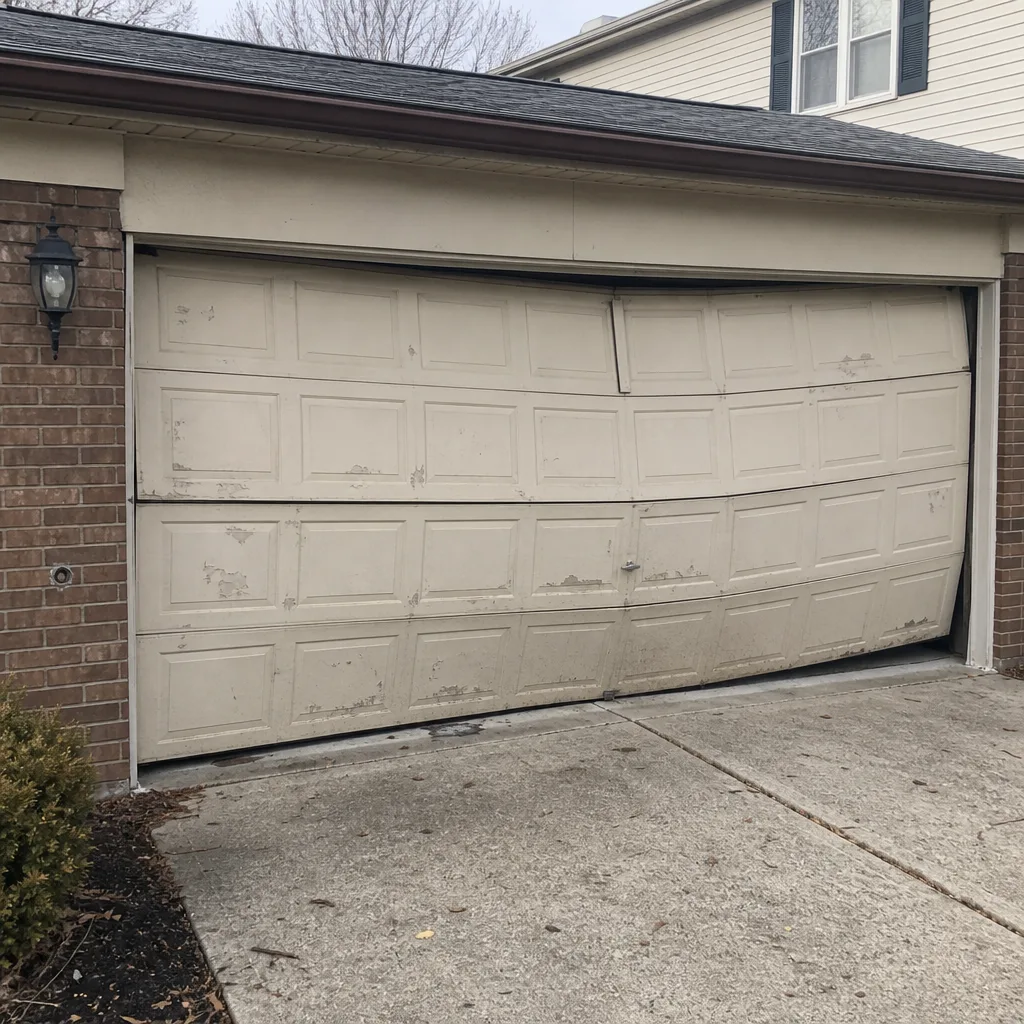 Before
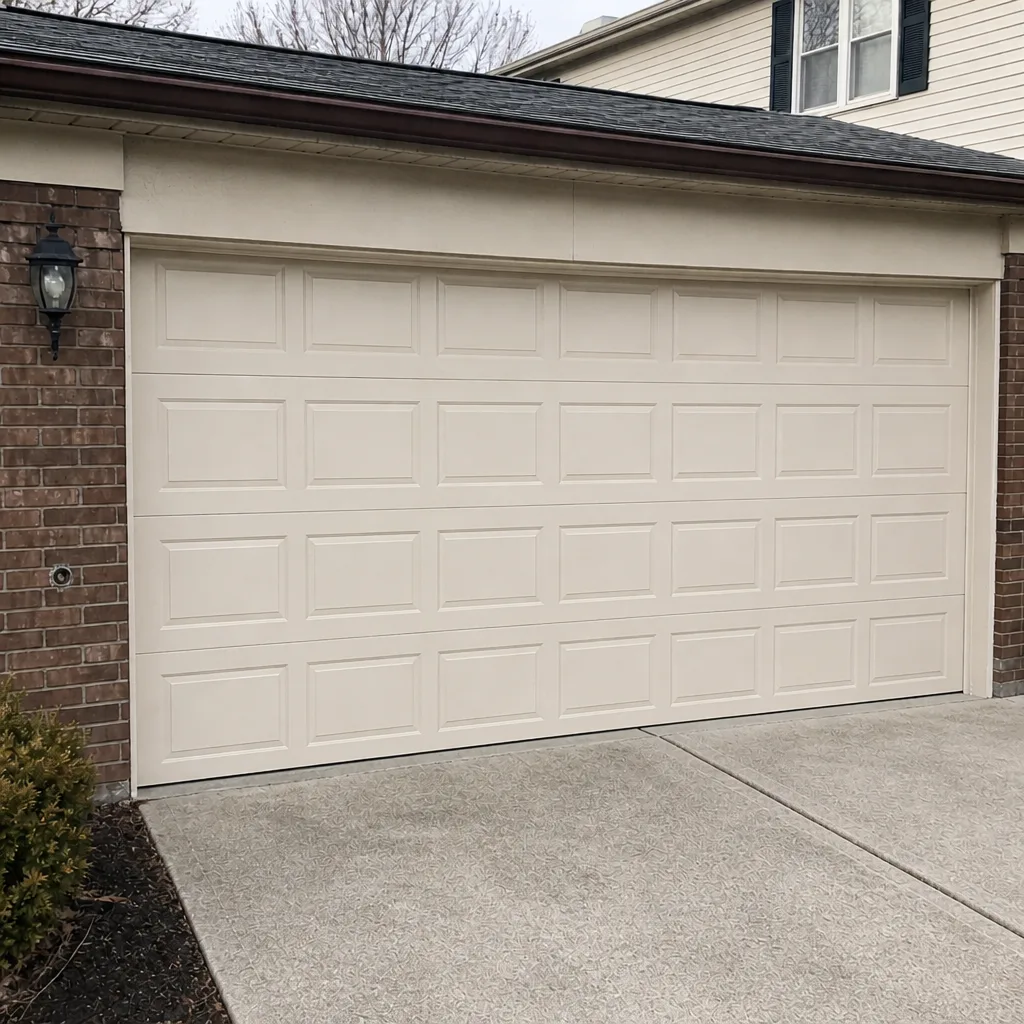 After
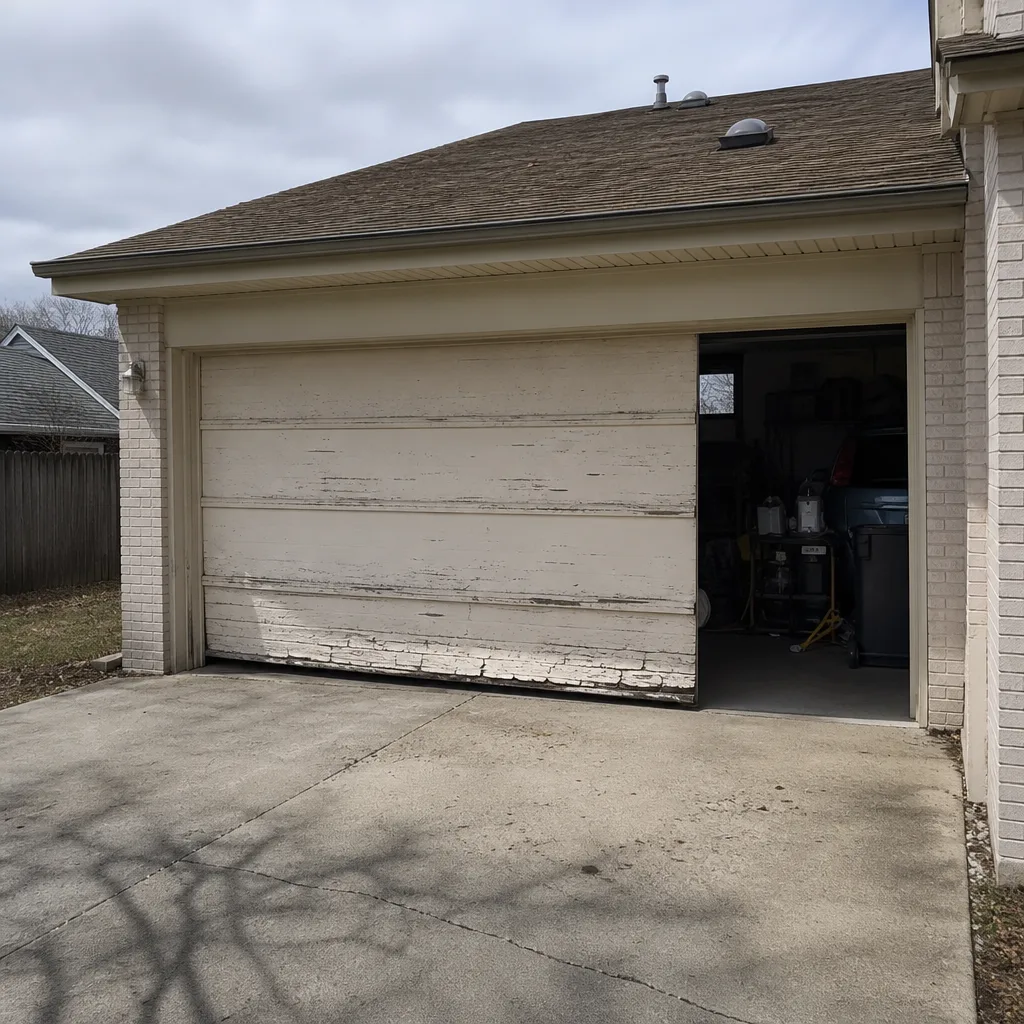 Before
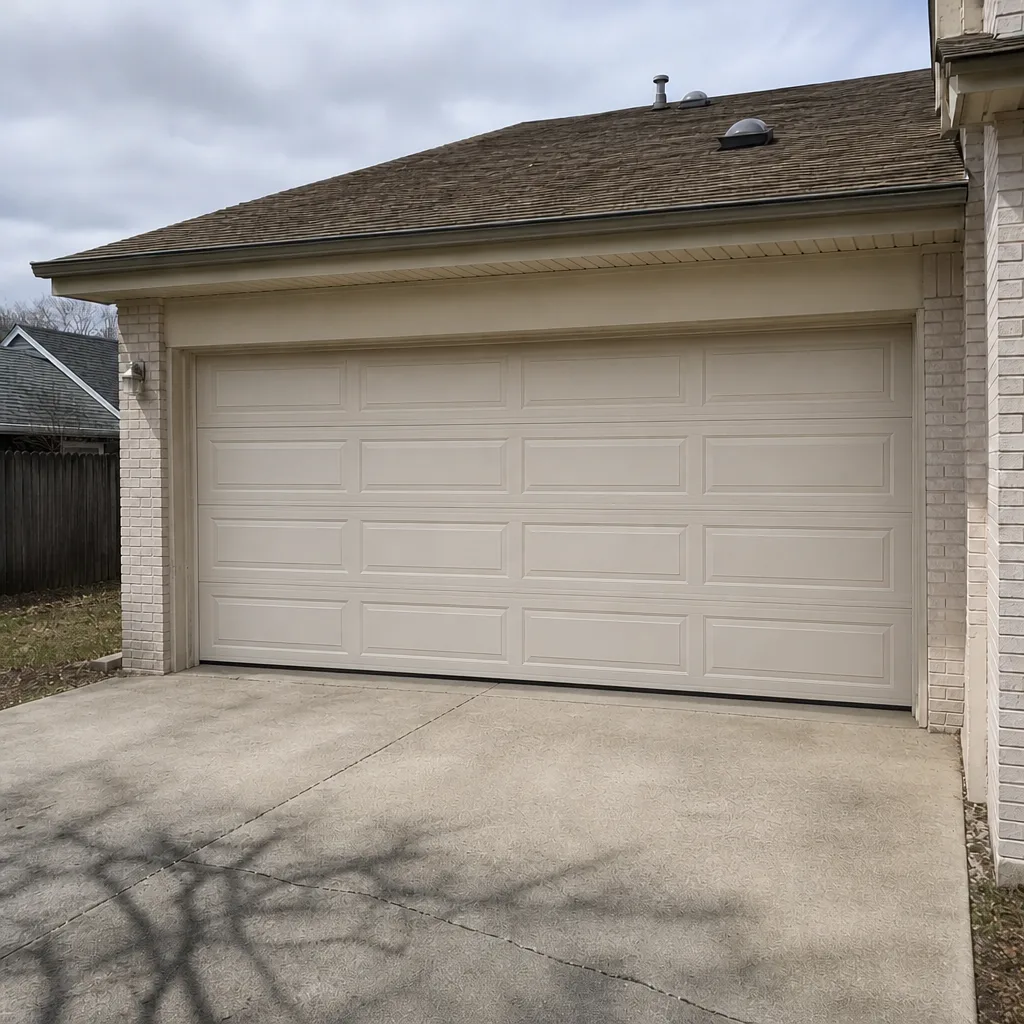 After
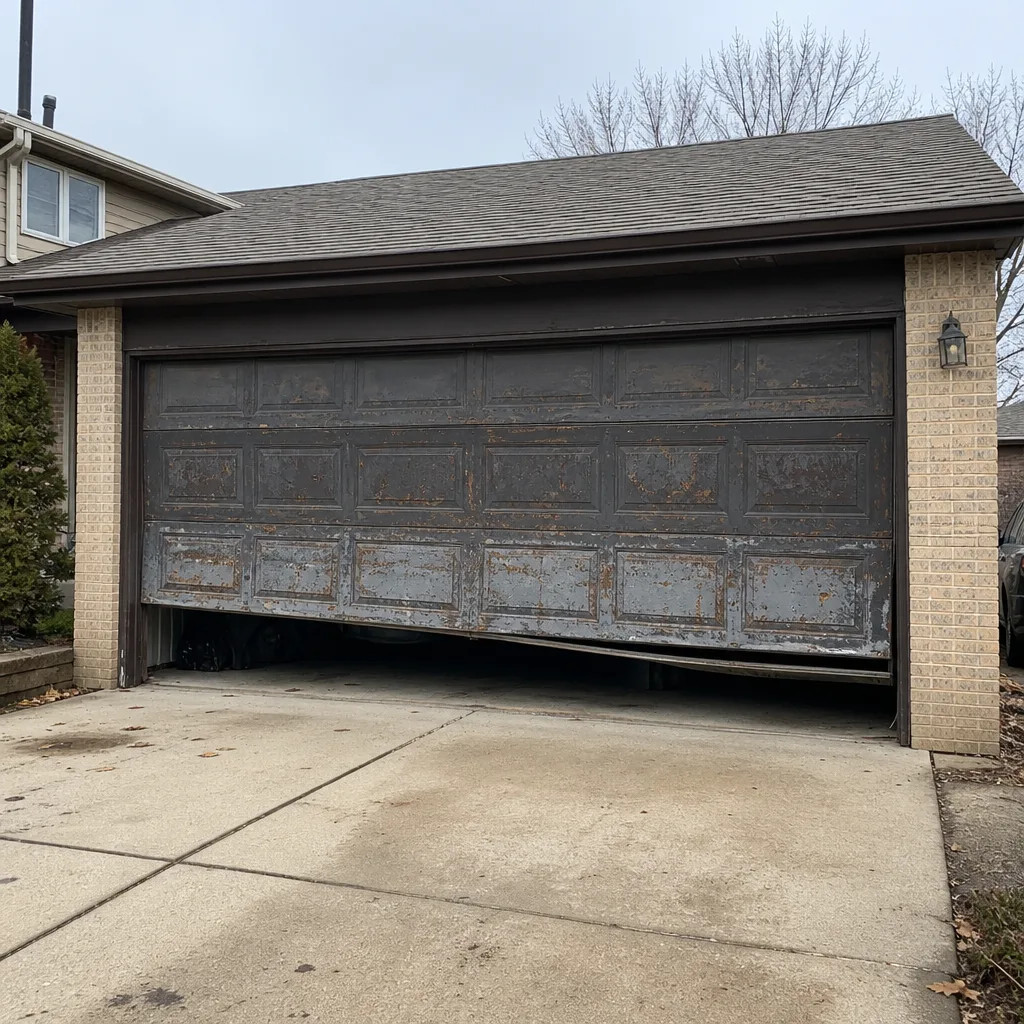 Before
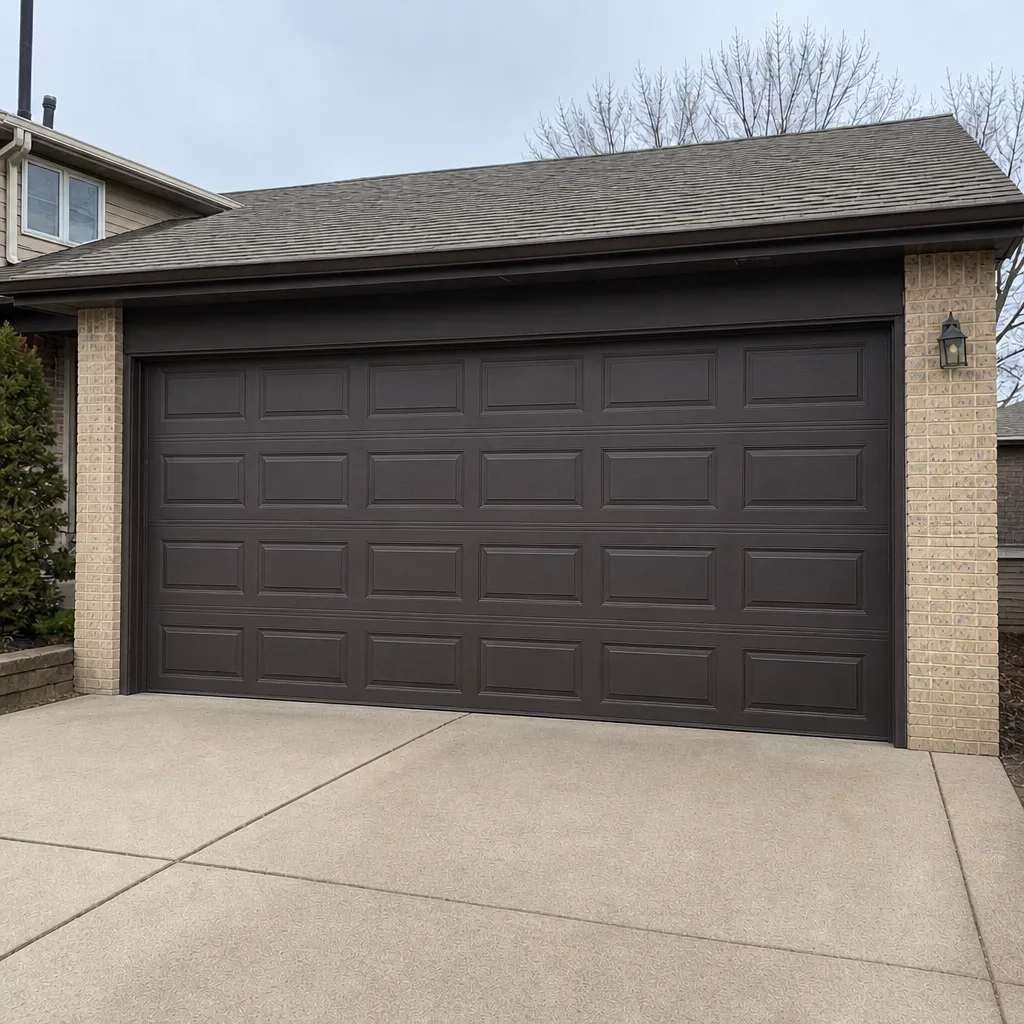 After
When to Call a Professional
Call a professional the moment you see a broken spring, a frayed or slack cable, a door hanging off its track, or a door that fails the safety reversal test. Those four are stop-and-call conditions. Also call if the door has started moving unevenly, reverses before it closes, or makes a grinding noise that has lasted more than a week. A quick diagnostic from a trained technician beats guessing, and catching the problem at the warning-sign stage is how you avoid a full door replacement. Orland Park Garage Door Repair offers free estimates in Orland Park – call (888) 569-6449.
Frequently Asked Questions
The most common is a door that hesitates for a second or two before it lifts, which almost always points to a torsion spring losing tension. It shows up most often on the first cold morning of the season. If the door suddenly develops that pause, treat it as a spring check, not as an opener problem.
No. Torsion and extension springs store an enormous amount of energy, and the injury risk from an untrained repair is serious. The right move is to stop using the door, disconnect the opener, and call a trained technician. Call (888) 569-6449 for a free estimate – estimates are free.
A door is dangerous to operate if a spring or cable has visibly failed, the door is off one or both tracks, the door has fallen or reversed unexpectedly, or the safety reversal test has failed. If any of those apply, stop using the door and call. Our emergency service exists for exactly these situations.
No. We quote the job in writing before any work starts, and the written estimate is the price. If the diagnosis changes once we’ve inspected the door, we re-quote and get your agreement before doing the additional work. You won’t get a surprise invoice bigger than the quote.
We service eight major brands: LiftMaster, Chamberlain, Genie, Clopay, Amarr, Wayne Dalton, Craftsman, and Raynor. That covers most of the door and opener equipment on homes in Orland Park. If you’re unsure which brand you own, take a photo of the sticker and we’ll identify it.
Test it about once a season, and always before a long trip or a stretch when the house will be empty. The test takes about 30 seconds and is the only way to catch a failed reversal before it matters. If it fails, call (888) 569-6449 – estimates are free.
The Bottom Line
Garage doors give you warning. A pause before the lift, a grinding roller, a fuzzy patch on a cable, a door that ignores an obstruction: each of those is the door telling you what’s about to break, and what kind of urgency to attach to it. Read the sign, sort it into urgent, soon, or eventually, and call a specialist rather than a generalist. A spring failure, a frayed cable, or a failed safety reverse is a same-day call. Grinding and rattles are a two-week call. Anything visual-only and cosmetic can wait for a maintenance visit. Our technicians have up to 13 years of experience, and we work on the brand you already have. If you’re seeing any of these signs, contact Orland Park Garage Door Repair for a free estimate. Call (888) 569-6449 and we’ll help you sort a warning sign from an emergency, then book the garage door repair that gets the door working again.
Written by the team at Orland Park Garage Door Repair.