Top Signs You Need Garage Door Service – Don’t Ignore These
The warning signs are usually not subtle. They’ve just been relabeled as quirks: the door that “always sounds like that,” the opener that “takes a second,” the bottom seal that “has a little gap.” Each one points to a specific part that’s wearing out, and fixing that part early is what keeps a small repair small. If you’d rather have a trained eye look at it than climb a ladder yourself, call (888) 569-6449. Here are the signs we see most, what’s actually failing behind each one, and which ones can’t wait.
Key Takeaways
- Noises, uneven gaps and slow responses are symptoms of named failing parts – rollers, springs, cables, seals, opener gears – not personality traits of your door.
- Ignoring one worn component speeds up wear on its neighbors: bad rollers punish the tracks, hinges and opener motor.
- Two signs are same-day emergencies: a snapped spring and a door that reverses without hitting anything.
- The other common signs usually allow a scheduled appointment within a week before they turn into a bigger repair.
That Grinding Noise Isn’t the Door “Warming Up”
Cold mornings make the truth louder. A dry, grinding or scraping sound when the door travels is metal contacting metal, and the usual suspect is worn nylon or steel rollers whose bearings have seized. Once a roller stops rolling and starts dragging, it grinds against the track and forces every hinge and the opener motor to work harder than they were designed to. That’s the part homeowners write off as normal. It isn’t the weather. It’s a component that has stopped doing its job, and the longer it drags, the more of the system it takes with it. If you notice this in Orland Park, have the rollers checked before the track pays for it. A few quiet minutes of diagnosis beats the sound of a door that suddenly won’t budge. If you’d rather not poke around the hardware yourself, garage door repair covers exactly this kind of inspection and adjustment.
Uneven Gap at the Bottom Seal: The Sign Most People Miss
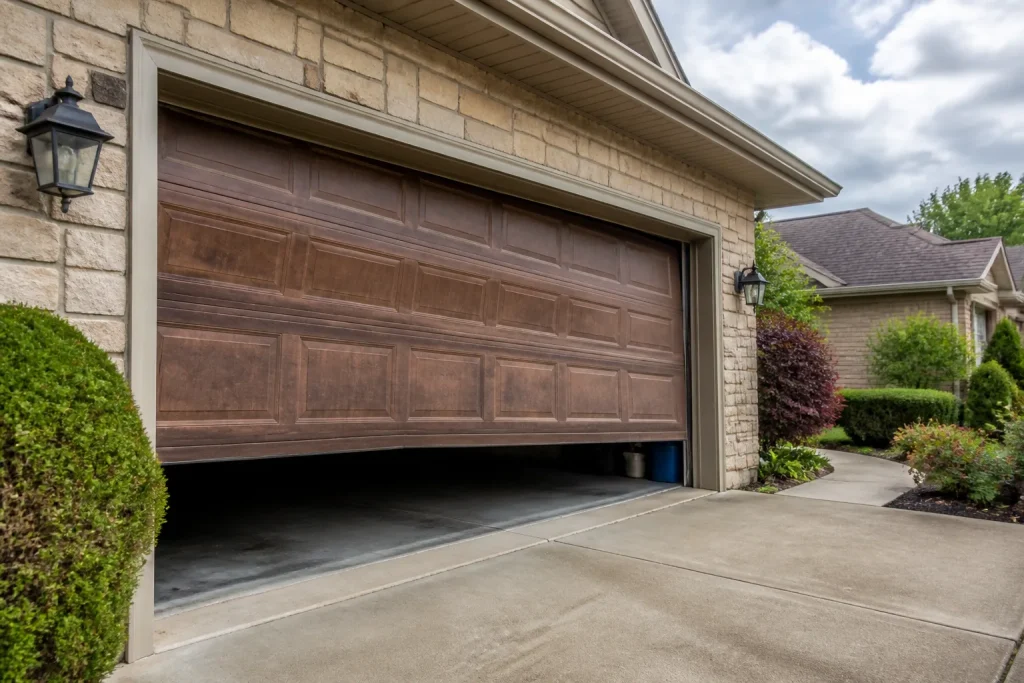
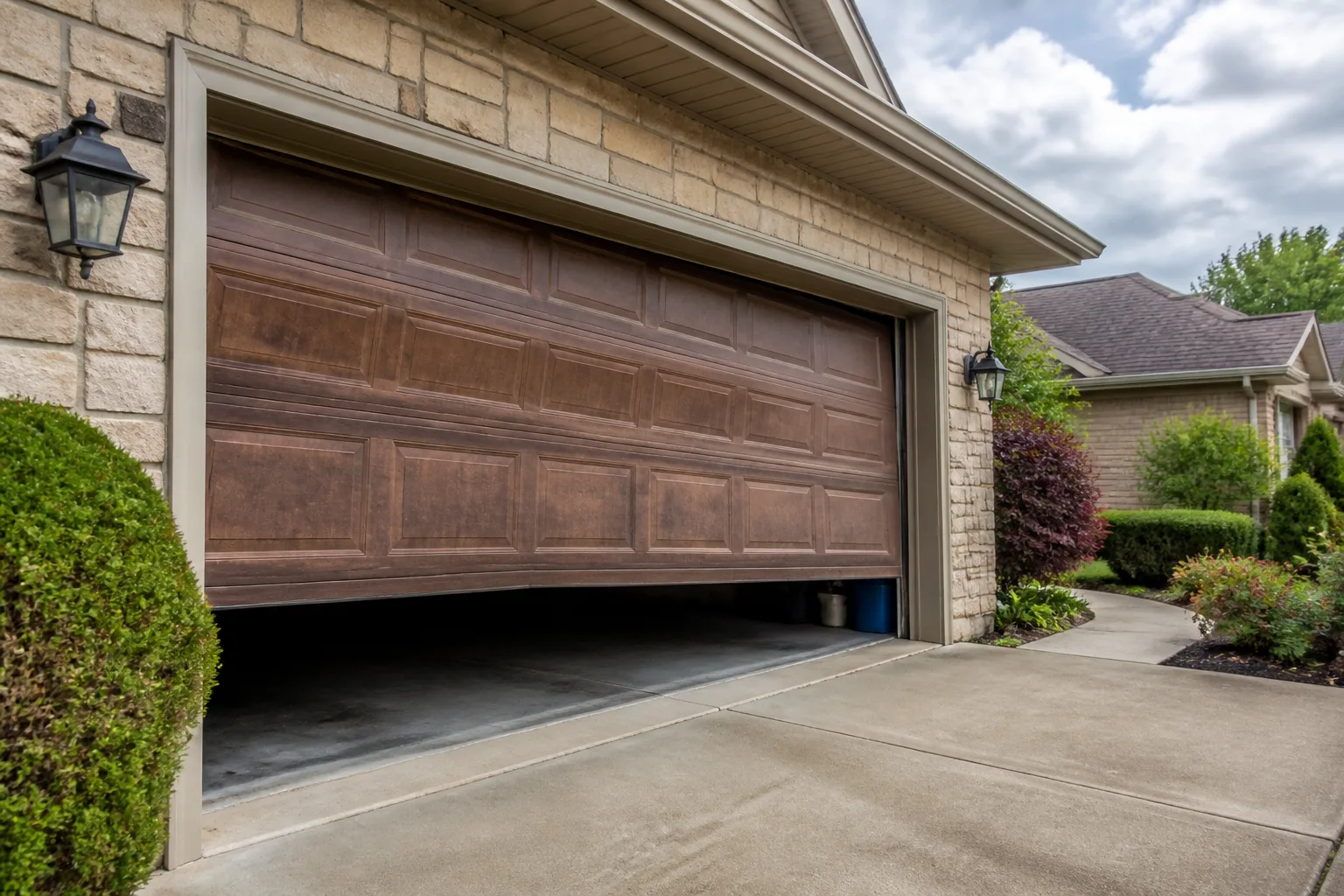
Stand inside a dark garage and look at the bottom of the closed door. If light shows through a gap on one side, or the seal meets the floor on one end and hovers on the other, something in the door’s balance is off. The likely culprits are a stretched or failing spring on one side, a cable that’s slipped, or a bent track pushing the panel out of alignment. That gap also lets in drafts, rain and pests, and it tells you the door is no longer traveling evenly. In Orland Park’s freeze-and-thaw winters, a seal that sits uneven only gets worse as the door works harder to close. This is one of the earliest, cheapest signs to catch. Address the balance now and you avoid a cable or track repair later. Ignore it and you’re feeding the same wear cycle. Ask us to check the spring tension and track alignment, because those are what keep the bottom edge level. A matched pair of springs is usually replaced together, and a single spring estimate doesn’t cover the pair.
The Opener That Runs Longer Before the Door Moves
Listen next time you press the button. If the motor whirs for a second or two before anything happens, the opener is telling you about drag in the door itself. The drive gear, the trolley or a worn belt or chain is straining against a door that’s gotten heavier to move, often because of the same roller or spring problems above. On a chain-drive Genie or a belt-drive LiftMaster, that delay usually means the opener is overworking, and overworked openers burn through gears and boards. It’s also a sign the door’s balance has drifted, so the motor is lifting weight the springs should be carrying. This is one of the clearest early warnings, and it’s easy to confirm with a simple balance check by a technician. The fix often lives in the door, not the opener. If your opener is the newer part, we work on the brand you already have and diagnose before recommending replacement. Our technicians have up to 13 years of experience reading exactly these clues.
Door Reverses Without Hitting Anything: Stop and Call
If the door starts down, hits nothing, and reverses back up, treat it as a same-day safety issue, not a quirk. The likely failure is in the safety-reversing system: misaligned photo-eye sensors, a bound-up limit switch, or debris in the track fooling the opener into thinking something is in the way. A door that reverses unpredictably can also close on a person or a pet, so don’t keep testing it. This is one of the two warning signs that shouldn’t wait for a scheduled visit. Call us and arrange emergency service. A snapped torsion or extension spring is the other: with a spring gone, the door can drop hard under its full weight, and the high-tension cables and springs are never a DIY job. In our experience, spring repair done right by a trained specialist is the difference between a fix and a hazard. If your door is in that state in Orland Park, stop using it and contact us. When the door won’t move, that’s the call to make.
The Cascade Effect: How a $150 Fix Becomes a $600 One
Parts in a garage door system don’t fail alone. One worn component accelerates wear in its neighbors, and that’s the part most homeowners don’t see coming. A dragging roller chews up the track. A misaligned track stresses the hinges and the panels. A door that’s out of balance makes the opener motor do work the springs should handle, and the motor is the expensive piece. Springs that have lost tension force the opener to strain, and a strained opener eventually fails. Each step is cheap on its own and expensive stacked together. That’s why we frame early service as cost avoidance rather than a sales pitch. Catching the grinding roller before it grooves the track saves the track. Catching the uneven gap before a cable snaps saves the cable and the spring. Homeowners in Orland Park often call us after a small issue has already grown into a bigger repair, and the diagnostic conversation is usually about what could have been caught a month earlier.
Why Homeowners Wait, and Why That Costs More
The most common reason people delay is fear of the diagnosis. Something sounds wrong, but calling means hearing a number, and hearing a number is worse than the noise. We get it. Here’s the reframe: the goal of an early visit is to find the one part that’s failing, not to open a can of worms. Worn rollers and a seal adjustment are routine, and the point of checking early is to keep it routine. A door that’s out of balance or has a straining opener is a conversation about a fix, not a replacement, and the technician can tell you which. We work on the brand you already have, so the question is what needs service, not what needs replacing. The estimate is free and the plan is upfront. And here’s the one bit of humor we’ll allow ourselves: your garage door has been trying to tell you something for weeks, and it’s been remarkably patient about it. Getting it looked at now is how you keep a scheduled appointment from becoming an emergency call. A door that’s reached the end of its life can be replaced, and one call covers the full job if that’s the verdict. But most quirks we’re asked about turn out to be a service, not a new door.
When to call a pro
Any grinding noise, uneven seal gap, slow opener response or reversing door is a reason to get a specialist on the phone. The high-tension springs and cables are the one part you shouldn’t touch yourself, and the reversing door is a genuine safety issue. Our garage door opener repair and garage door spring repair handle the two most common causes, and our main Orland Park Garage Door Repair page covers the full range. We service Genie, Clopay, Amarr, Wayne Dalton and other major brands across Orland Park, so the system you own is one we know.
The Bottom Line
The signs worth acting on are the ones that point to a named failing part, not a personality quirk of your door. Grinding means rollers and drag. An uneven gap means balance, spring or track. A slow opener means strain on the motor. A reversing door or a snapped spring means stop and call today. Everything else usually allows a scheduled visit within the week, which is when it’s cheapest to fix. If you’re in Orland Park and need help, Orland Park Garage Door Repair offers free estimates and upfront pricing – call (888) 569-6449. The price is quoted and agreed before any work starts, so the number you hear is the number you plan around.
Frequently Asked Questions
The most common signs are grinding or scraping noises, an uneven gap at the bottom seal, an opener that runs longer before the door moves, a door that reverses without hitting anything, and a door that’s become heavy or sluggish. Grinding points to worn rollers, the gap points to spring or track misalignment, and the slow opener means it’s straining. In Orland Park, any of these is worth a call. Call (888) 569-6449 for a free estimate.
Two need same-day attention: a snapped spring and a door that reverses without hitting anything. A broken spring lets the full door weight rest on the cables and opener, which is a safety hazard, and a reversing door can close unpredictably. Both warrant emergency service. The other common signs usually allow a scheduled appointment within a week. Call (888) 569-6449 to talk through what your door is doing.
The written estimate sets the price, and we quote it and agree it before any work starts. A technician will show you what’s failing and what it takes to fix it, and the final number matches the agreement. If something changes once the door is open, we discuss it first. Call (888) 569-6449 for a free estimate.
Yes, the local pro is licensed and insured as their state requires. Our technicians have up to 13 years of experience with the major brands, including LiftMaster, Chamberlain, Genie and Clopay, so they can read the specific way your system is failing. Call (888) 569-6449 and we’ll get you scheduled.
Written by the team at Orland Park Garage Door Repair.
Need Garage Door Help?
Call Orland Park Garage Door Repair - the local pro we connect you with is licensed and insured, here with fast after-hours help in Orland Park.
(888) 569-6449