Garage Door Repair: Repair or Replace? How Orland Park Homeowners Decide
A technician recommending replacement isn’t automatically wrong – but a homeowner who doesn’t understand the decision framework has no way to tell a legitimate recommendation from an upsell. That’s the uncomfortable part of this decision. Most Orland Park homeowners facing a failing door are working from instinct and a vague sense that the quote seems high. Repair or replace comes down to three things: structural integrity, parts availability, and what the door will cost you over its remaining life. Not the sticker price alone. Get those three sorted and the answer usually becomes obvious.
If you’d rather not climb that ladder of reasoning yourself, call (888) 569-6449 and we’ll walk through it with you – free estimates, no pressure.
Key Takeaways
- Replacement makes sense when panels are structurally compromised, parts are discontinued, or cumulative repair cost approaches the value of the door.
- Orland Park’s freeze-thaw cycles stress steel doors differently than fiberglass or wood composite – material choice affects how long a door actually lasts here.
- A door replacement sometimes forces an opener replacement, and sometimes doesn’t. Knowing which applies can save you real money.
- Partial replacement (a single panel or section) is a valid middle path when the structure allows it – and a costly delay when it doesn’t.
What are the real tipping points for replacing a garage door in Orland Park?
The tipping point for replacement in Orland Park isn’t cosmetic wear or a single noisy cycle – it’s when the door’s structure, parts, or repair math cross a clear line. There are four criteria that matter most, and a legitimate replacement recommendation can usually be traced back to one of them.
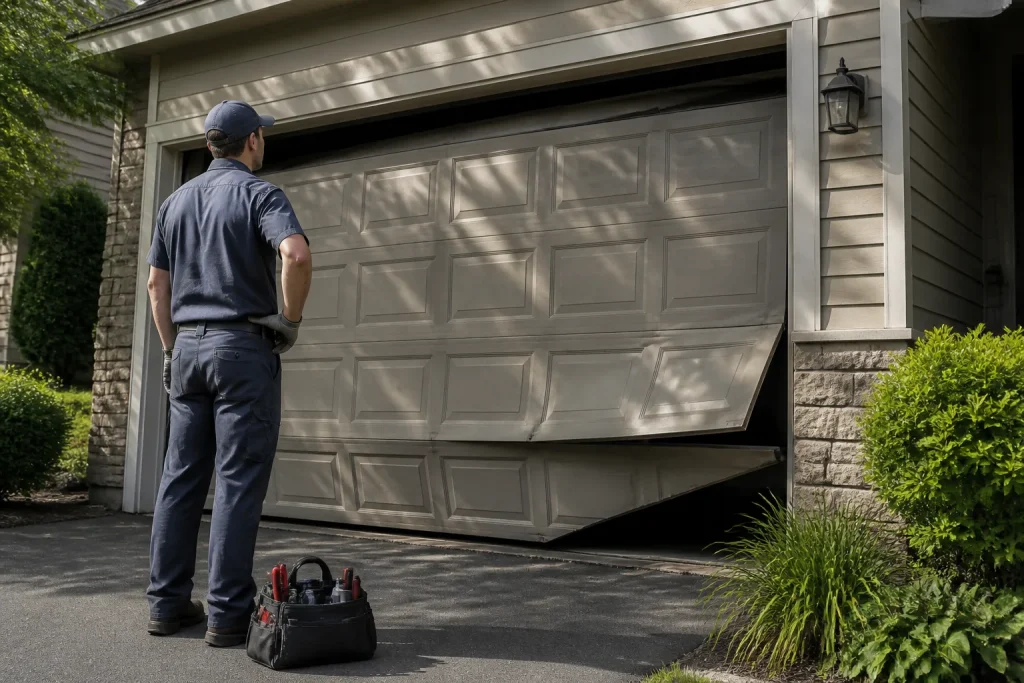
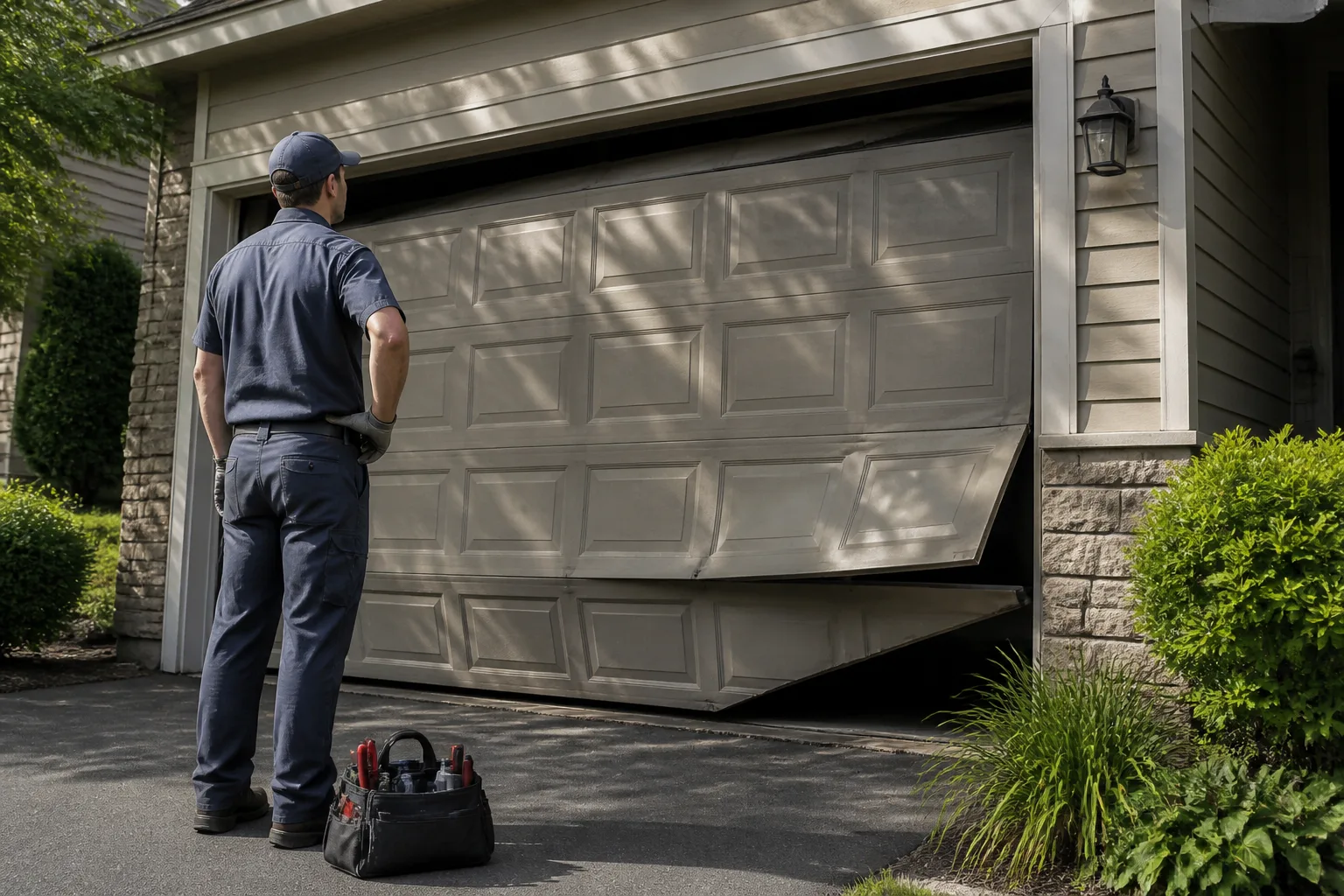
- Panel structural compromise. A dented panel is cosmetic. A panel with cracked struts, separation at the seams, or a sagging bottom section is structural. Once the door can’t hold its own shape, repair stops being reliable.
- Discontinued part lines. Older doors from brands like Clopay or Wayne Dalton sometimes reach a point where the matching panel, hinge profile, or track is no longer manufactured. When parts are gone, repair isn’t a choice anymore.
- Cumulative repair cost relative to door value. If you’re looking at a spring replacement, a panel swap, and new rollers in the same year, add those up and compare to the cost of a new door. When the repairs approach half the value of replacement, the math starts favoring a new door.
- Opener compatibility. An older Genie or Chamberlain opener may not have the lift capacity or safety features a newer, heavier door requires. That compatibility question is covered further down.
In our experience around Orland Park, the honest answer is usually repair. Doors get replaced more often than they need to be. But when one of those four boxes is checked, pushing repair further just delays the invoice.
How do Orland Park’s freeze-thaw cycles change the repair-or-replace math?
Orland Park’s climate is the reason material choice matters more here than in milder regions. Repeated freeze-thaw cycles – water getting into seams, freezing, expanding, then thawing – work on a garage door the way they work on a driveway. Steel, fiberglass, and wood composite each respond differently, and that response determines how long a door realistically lasts.
- Steel doors handle freeze-thaw best in most cases. They resist moisture absorption and hold their shape through temperature swings. The weak point is the paint or finish – once it fails, moisture finds bare metal and rust accelerates. A steel door that’s been kept painted tends to age well; one that’s been ignored doesn’t.
- Fiberglass doors resist rust and moisture intrusion but become brittle with age and cold. Hairline cracks from impact or thermal stress can spread. Once a fiberglass panel cracks, matching it is often harder than repairing steel.
- Wood composite doors are the most susceptible to freeze-thaw. Any gap in the finish lets moisture in, and the expansion-contraction cycle opens seams over time. They can last decades when maintained, but the maintenance burden is real.
When we’re evaluating a door for replacement, the material question comes before the repair estimate. A steel door with a small dent and a working opener is a repair. A wood composite door with seam separation through three panels is telling you something different.
When does a new door force a new opener – and when doesn’t it?
A door replacement doesn’t automatically mean an opener replacement. But it often does, and that’s the cost multiplier most homeowners don’t see coming when they budget for a new door. Whether you need both depends on three factors.
You likely need a new opener if:
- The existing opener is older and rated for a lighter door than the replacement. Lift capacity is a hard spec, and a new insulated steel door can weigh significantly more than the door coming off.
- The opener lacks current safety reversing features – the sensors and auto-reverse that newer openers from LiftMaster or Chamberlain include as standard.
- The opener is already showing wear – straining, slowing, or failing to complete a full cycle. Installing a heavy new door on a tired motor shortens the opener’s remaining life.
You likely don’t need a new opener if:
- The opener is recent, rated for the new door’s weight, and cycling cleanly.
- Its safety features are current and functioning.
- The rail and mounting hardware are compatible with the new door’s track configuration.
The practical move is to have the opener evaluated at the same time as the door. If it’s borderline, the honest answer is usually to plan for it now rather than pay for a second service call later. If you do end up needing garage door opener repair separately, that’s a distinct job from the door itself.
What is the middle path – and when is a partial replacement valid?
Partial replacement is a legitimate middle path in Orland Park, but only under the right structural conditions. A single damaged panel can often be swapped without replacing the whole door. The catch is that the replacement panel has to match the profile, color, and manufacturer of the existing door – and that becomes harder as doors age.
Partial replacement is structurally valid when:
- The damage is confined to one or two panels and the rest of the door holds its shape.
- The panel is still manufactured and available in the matching profile and color.
- The track is straight and the hinges and rollers are sound.
- The vertical and horizontal structure of the door is intact.
Partial replacement becomes a temporary fix that delays the inevitable when:
- The door has multiple compromised panels or sagging sections.
- The panel line is discontinued, forcing a mismatched substitute.
- The underlying issue is sagging or track damage, not a single dent.
- Multiple panels are failing at the seams – a sign the whole door has reached end of life.
A panel swap on a sound door buys years of service. A panel swap on a failing door just delays the invoice and leaves you with a door that’s harder to operate in the meantime. If you’re not sure which situation you’re in, that’s the conversation to have before deciding.
When should you call a pro – and what should you ask?
Any garage door work involving torsion springs, cables, or the high-tension hardware that holds the door up is a job for a trained professional. These are the components that cause real injury when they fail under load. No amount of online guidance makes spring work a safe DIY project. If a spring snaps or the door comes off its tracks, stop and call.
For the repair-or-replace conversation specifically, ask these questions before you agree to anything:
- Which panels are structurally compromised, and why? A cosmetic dent is different from a structural failure. Make the technician point to the specific issue.
- Are the parts still manufactured? If the answer is no, the repair path is closed and they should tell you.
- What’s the remaining life of the door if we repair it? That’s a judgment call, but it’s a fair one to ask.
- Does the opener handle the replacement door? Lift capacity and safety features are hard specs. Get the answer before you sign off.
- What’s the itemized cost of each option? Repair vs. replace vs. partial replacement. A legitimate recommendation survives itemization. An upsell often doesn’t.
Our technicians have up to 13 years of experience and work across the eight major brands most Orland Park homeowners already own – LiftMaster, Chamberlain, Genie, Clopay, Amarr, Wayne Dalton, Craftsman, and Raynor. We diagnose the system you have rather than pushing replacement as a default. If the door needs a repair, we tell you. If it needs a replacement, we tell you that instead – with the reasoning laid out.
Related services in Orland Park: garage door repair for same-day fixes, garage door spring repair for the high-tension work, and Orland Park Garage Door Repair for everything else.
The Bottom Line
Repair or replace comes down to structure, parts, and total cost of ownership – not the technician’s sales pitch. If the door holds its shape, the parts still exist, and the cumulative repair cost is well below replacement value, repair is the right call. When any of those flip, replacement starts making more sense. And a new door sometimes brings a new opener with it, which is worth checking before you commit to a door quote.
The decision framework belongs in your hands, not a technician’s. In our experience Orland Park homeowners make good choices when they understand what they’re actually deciding. If you’re in Orland Park and need help, Orland Park Garage Door Repair offers free estimates – call (888) 569-6449. We’ll lay out the repair and replacement options and let you choose.
Frequently Asked Questions
Replace when panels are structurally compromised, parts are discontinued, cumulative repair cost approaches the value of a new door, or the opener can’t handle a replacement door’s weight and safety requirements. If none of those apply, repair is usually the better choice. Call (888) 569-6449 for a free estimate and a straight answer.
Freeze-thaw cycles do stress doors, especially wood composite and older fiberglass. Steel doors handle it best when the finish is maintained. The climate affects how long each material lasts, which affects whether repairing a given door is worth it. We factor that into the repair or replace recommendation.
Not always, but often. If the existing opener is older or rated for a lighter door than the new one, you’ll need to upgrade. If it’s recent and rated for the new door’s weight with current safety features, you may not. Have the opener checked at the same time as the door so you’re not surprised later.
Sometimes. A single panel swap is valid when the damage is confined to one or two panels, the rest of the door holds its shape, the matching panel is still manufactured, and the track and hardware are sound. If the door has multiple failing panels or the panel line is discontinued, partial replacement just delays the inevitable. Call (888) 569-6449 to find out which situation you’re in.
Written by the team at Orland Park Garage Door Repair.
Need Garage Door Help?
Call Orland Park Garage Door Repair - the local pro we connect you with is licensed and insured, here with fast after-hours help in Orland Park.
(888) 569-6449