Last updated November 22, 2026
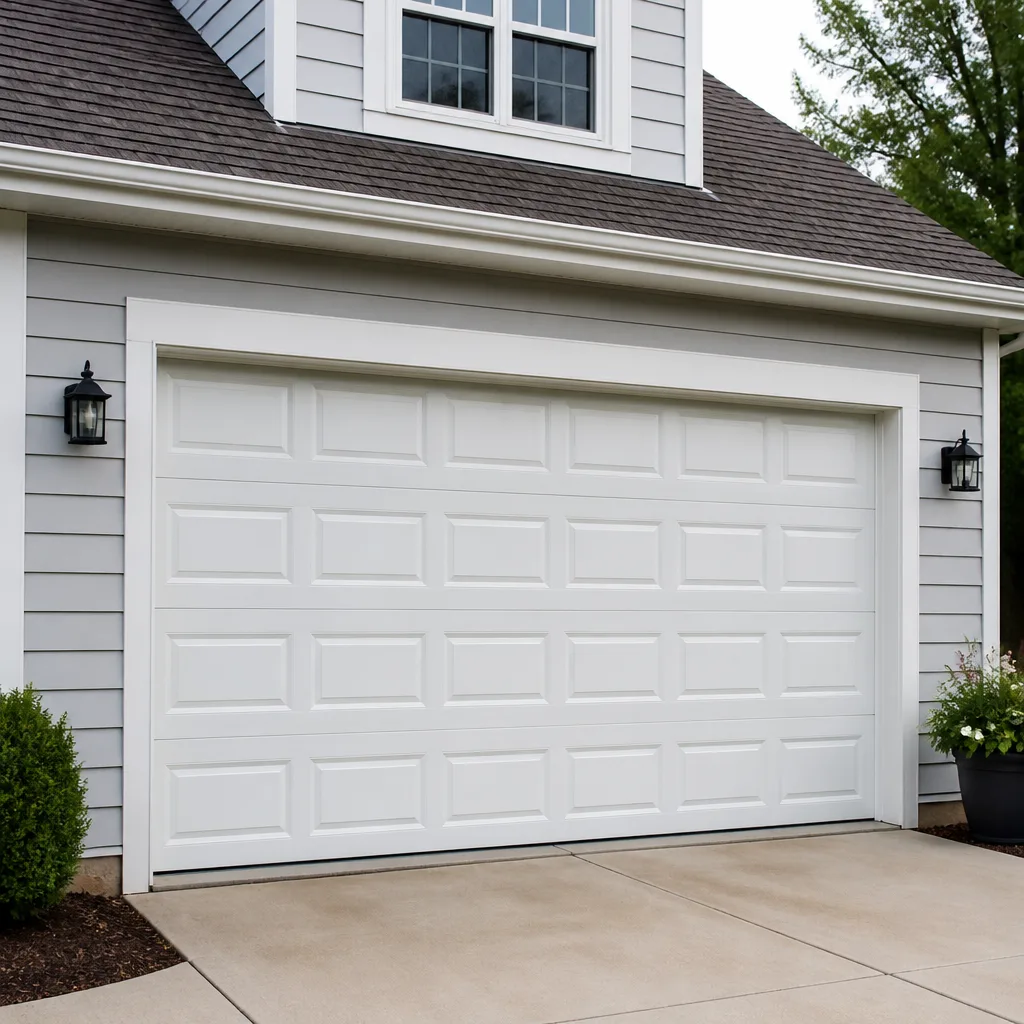 Raised-panel steel
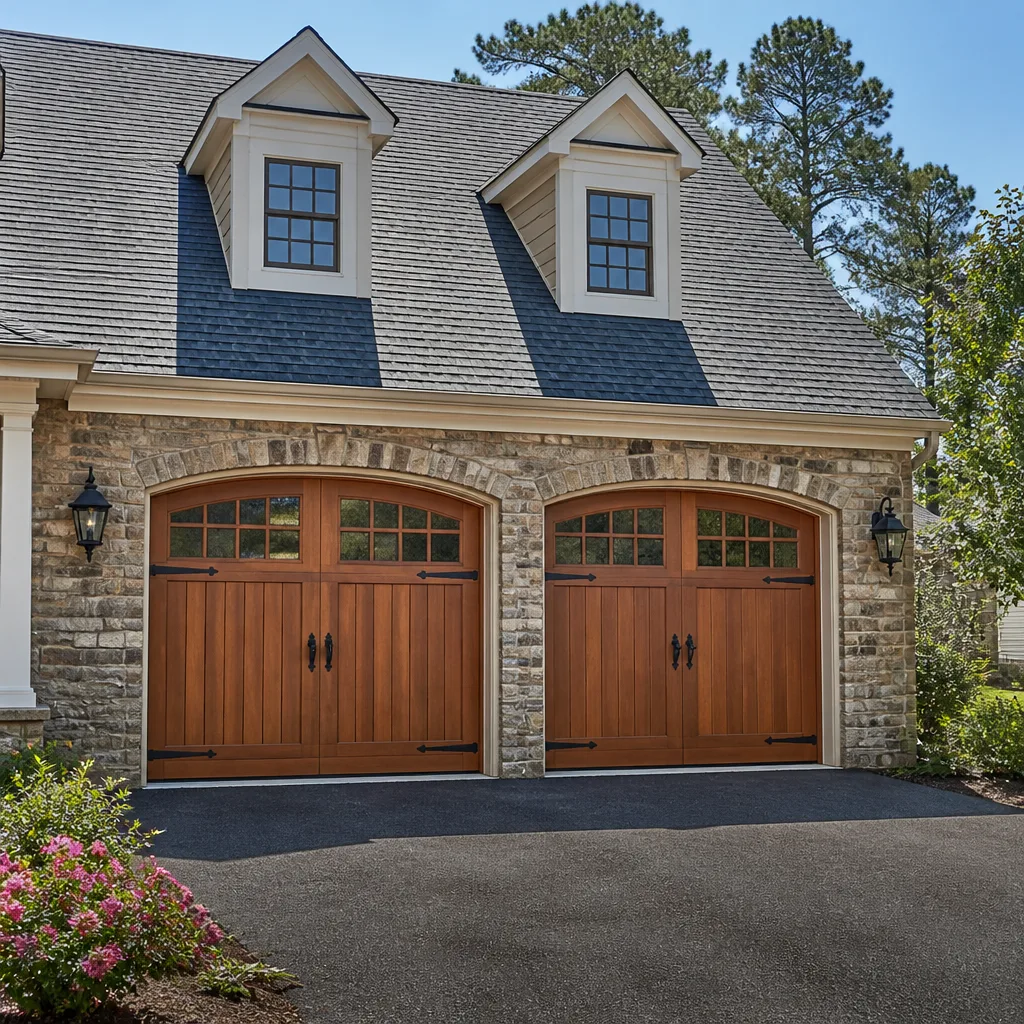 Carriage house
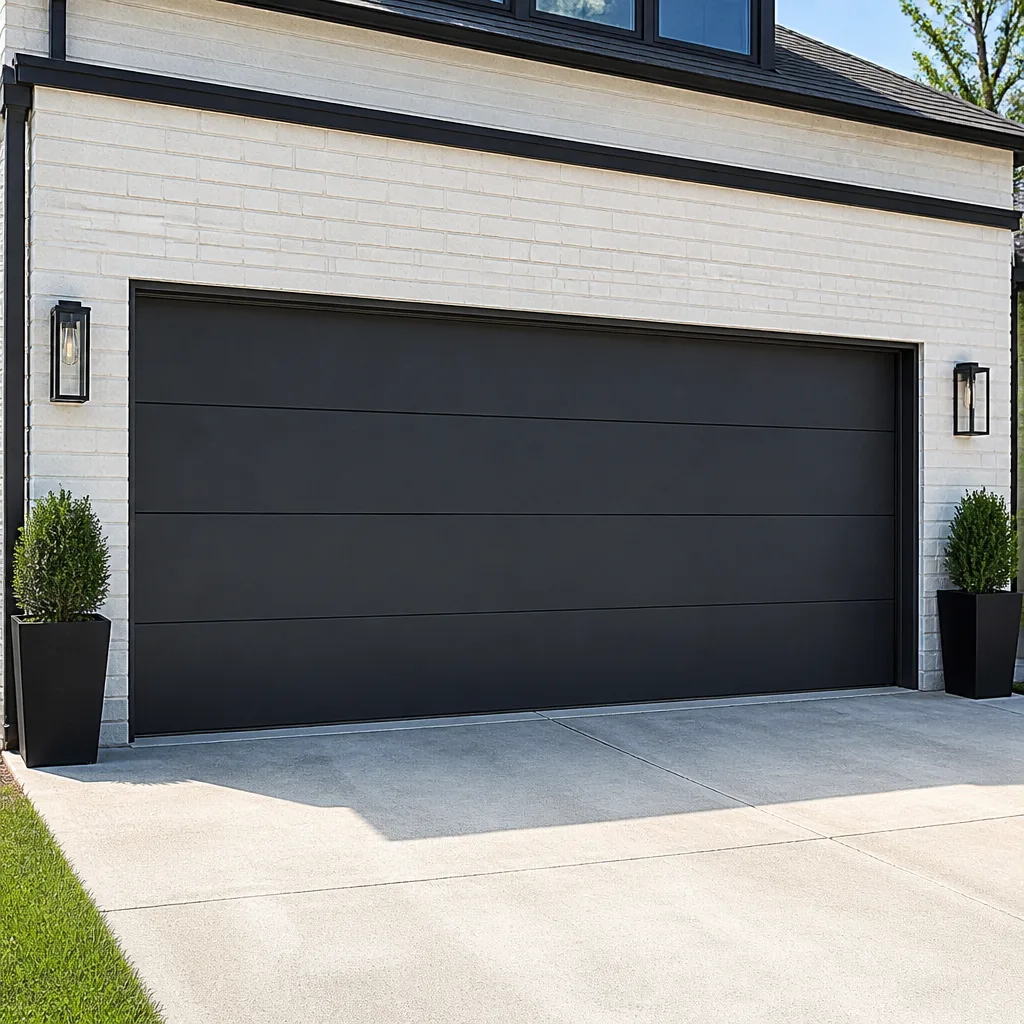 Modern flush
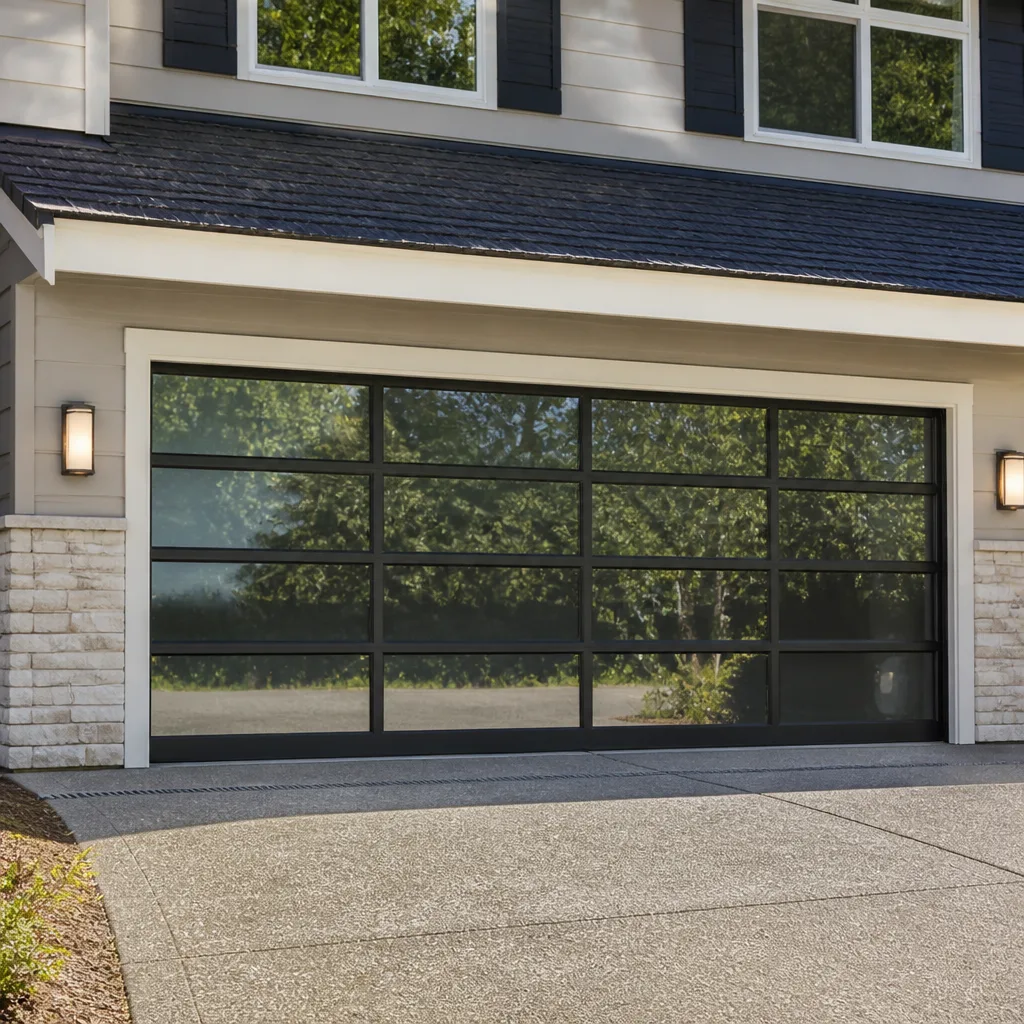 Full-view glass
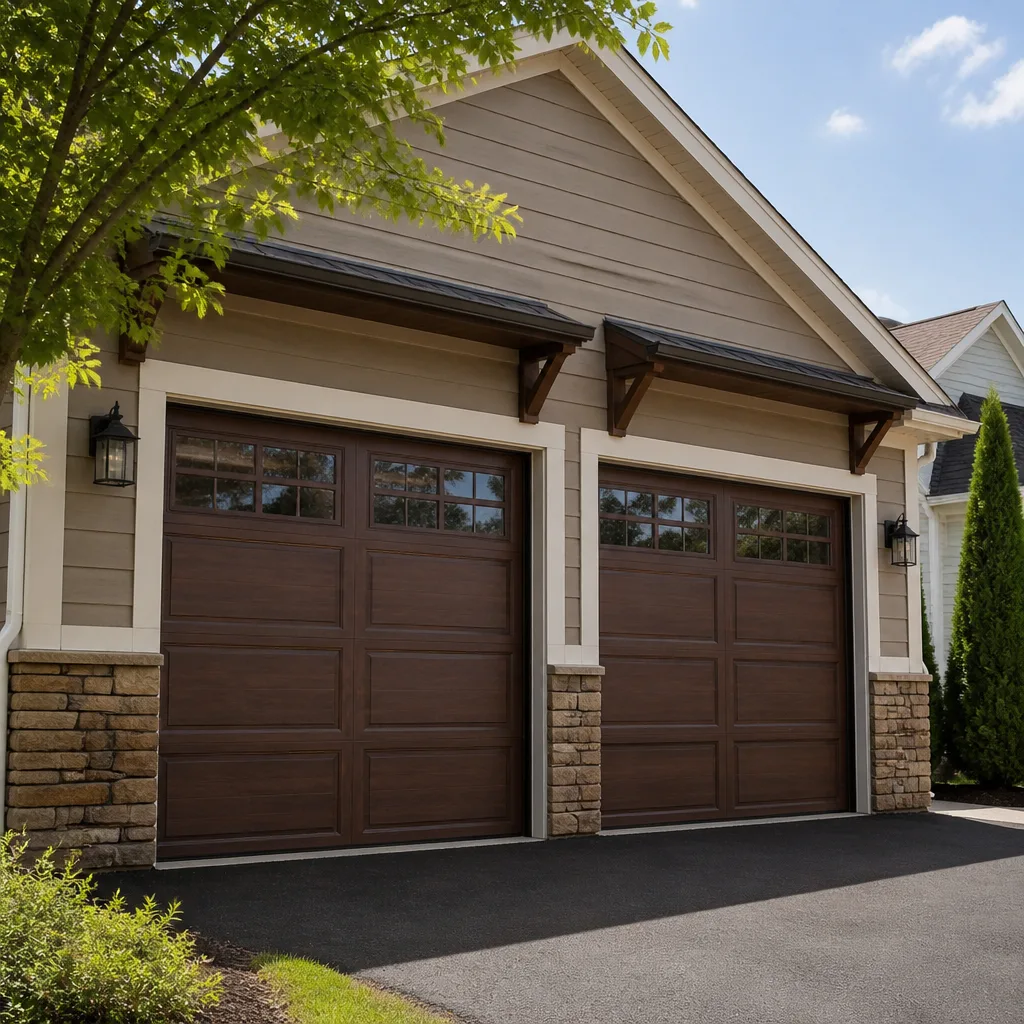 LiftMaster openers
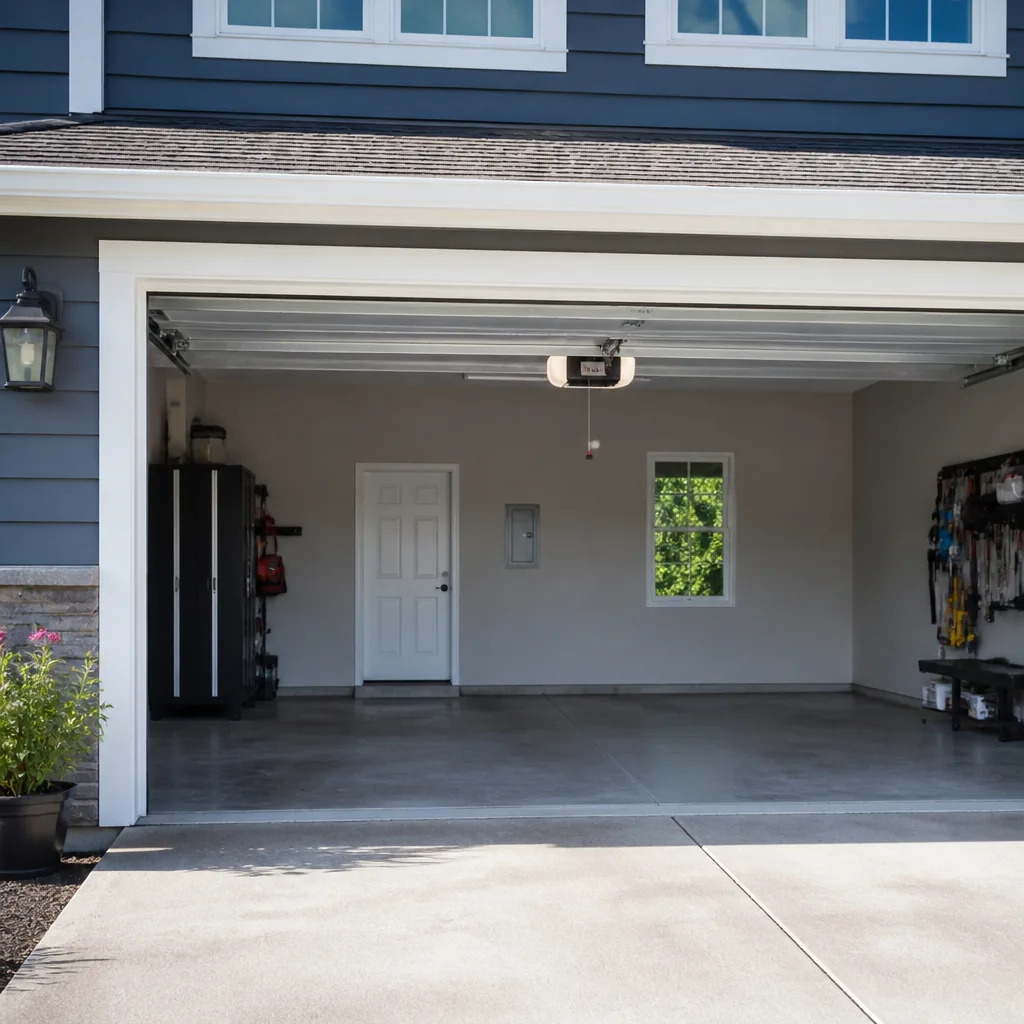 Chamberlain openers
Full 25-point door and opener safety check with every visit - springs, cables, rollers, tracks, and your LiftMaster or Chamberlain opener included
You get a price before we start. It does not change when the pro arrives.
Get your free estimateThe Complete Guide to Garage Doors in Orland Park
Most homeowners think of their garage door as one thing. It opens, it closes, and when it stops doing either, something is “broken.” That mental model is the reason small problems turn into expensive ones. A garage door is really a system of eight or nine parts that wear at different rates, and each one fails in a pattern shaped by the weather and the housing stock around it. In Orland Park, a door on a 1970s ranch sees a very different service life than one on a newer build, and the freeze-thaw cycles that define our winters work on every component differently. This guide breaks the door down part by part, explains what each piece actually does, and shows you how to read your own door’s condition in about five minutes. By the end, you’ll know what’s cosmetic, what’s mechanical, and what’s a genuine safety problem worth a call today.
Quick Answer
A garage door is a mechanical system of springs, cables, tracks, rollers, hinges, panels, a bottom seal, and an opener that must work together; in Orland Park’s freeze-thaw climate, springs typically last 7 to 12 years, openers 10 to 15, and weatherstripping as little as 2 to 4 years. The most common failures we see are broken torsion or extension springs, worn rollers, misaligned tracks from a bumped door, and openers that have reached the end of their motor life. Knowing which component has failed determines whether you’re looking at a small repair or a larger conversation about replacement.
Styles & brands we work with
- Raised-panel steel
- Carriage house
- Modern flush
- Full-view glass
- LiftMaster openers
- Chamberlain openers
Table of Contents
- How a Garage Door Actually Works
- Component-by-Component Lifespans in Orland Park’s Climate
- How Orland Park’s Housing Eras Shape Your Door
- The Brands You’ll See Most in Orland Park
- Cosmetic, Mechanical, or Safety: The Triage That Matters
- Your Five-Minute Door Inspection
- Repair or Replace? How to Decide
- Choosing and Maintaining an Opener
How a Garage Door Actually Works
A garage door looks like a single panel that swings or rolls, but it’s a balanced mechanical system. The door itself might weigh anywhere from 130 to 350 pounds depending on size and material. The springs, not the opener, are what make that weight feel like almost nothing. The opener’s job is to start and stop the door and hold it in place, not to lift its full weight. That distinction matters, because when a spring weakens or breaks, the opener suddenly has to do work it was never designed to do, and it usually fails shortly after.
The two spring systems you’ll encounter in Orland Park are torsion and extension. Torsion springs mount on a horizontal shaft above the door and twist to store energy. Extension springs run along the horizontal tracks on each side and stretch. Torsion is the more modern and generally safer design because the springs are contained on the shaft, but both are under extreme tension and both are dangerous to work on. Cables run from the bottom corners up to the springs and are what actually transfer the spring force to the door. Tracks guide the rollers, which let the door travel smoothly, and hinges connect the panels so the whole door flexes as it follows the curved track at the top.
Every time the door opens or closes, all of these parts move together. A slightly bent track adds friction to the rollers. Friction makes the opener work harder. Extra load accelerates spring fatigue. One small problem rarely stays small. That’s the core reason a garage door is best treated as a system rather than a list of separate parts, and it’s why our technicians look at the whole door, not just the part that made the noise.
Component-by-Component Lifespans in Orland Park’s Climate
Freeze-thaw is the defining force on garage doors in Orland Park. Our winters swing repeatedly between freezing nights and milder days, which expands and contracts metal, stiffens lubricant, and works at seals and weatherstripping. Summer humidity does its own work on wood-composite panels and steel that has lost its finish. Here’s how that plays out across the parts of the system, with typical service lives based on what we see on Orland Park doors.
- Torsion springs: 7 to 12 years. These carry the most load and cycle count, so they fail first. A door used as the main household entry cycles far more than one used only for the car.
- Extension springs: 6 to 10 years. They stretch and relax with every cycle, and the constant temperature swing in a Chicago-area winter shortens that further.
- Cables: 8 to 15 years. They fray where they wind on the drum; a cable that looks fuzzy is on its way out.
- Rollers: 5 to 10 years. Steel rollers are common on older doors and get noisy as bearings wear. Nylon rollers last longer and run quieter.
- Hinges and brackets: 10 to 20 years. They loosen and wear at the pivot points, and the bottom bracket takes the most abuse.
- Tracks: 15 to 25 years if not damaged. Tracks rarely wear out on their own; they get bent by contact or by a door that’s been run off-balance.
- Bottom weather seal: 2 to 4 years in our climate. The rubber hardens in cold, cracks, and lets in water and cold air. This is the cheapest part to replace and the most ignored.
- Opener: 10 to 15 years. Motors, gears, and circuit boards age; a chain-drive unit from the 1990s that still works is living on borrowed time.
- Panels: 15 to 30 years. Steel panels with intact finish hold up well; a panel that’s rusted through at the bottom is usually a section replacement or door replacement question.
These ranges assume normal use and some maintenance. A door that has never been lubricated or adjusted will land at the low end of every range. Our technicians have up to 13 years of experience reading exactly this kind of wear, and the pattern is consistent: the parts that fail first are always the ones nobody has looked at.
How Orland Park’s Housing Eras Shape Your Door
Orland Park grew fast in the 1970s through the 1990s, and the ranch and split-level homes from those decades share a set of garage door traits that still define what we service here. Most of these homes have a single-car or two-car attached garage with a standard 7-foot-high opening and a door width of 8, 9, or 16 feet. The 16-foot double door on a two-car garage is the most common configuration in the village, and it’s also the heaviest, which is why spring sizing on these doors matters so much.
The older ranch builds often came with extension springs, wood or hardboard panels, and steel tracks that have since accumulated decades of small bends. Split-levels from the same period frequently have a low headroom situation above the door, which affects how a torsion spring or opener rail can be mounted. When we quote a replacement on an Orland Park split-level, headroom is one of the first things we check, because it can rule out certain opener types or spring configurations.
Newer construction and renovation in Orland Park skews toward insulated steel doors, torsion springs, and belt-drive openers. Homeowners who’ve updated their garage often want a quieter door and better insulation because the garage sits under or beside living space. The takeaway: the era of your home tells you a lot about what’s behind the drywall before anyone opens the door. If you know your house was built in 1978, you can reasonably expect extension springs unless they’ve already been converted, and you can expect a door that’s been through four decades of our winters.
The Brands You’ll See Most in Orland Park
Garage doors and openers are a brand-driven market, and in Orland Park a handful of names come up again and again. Clopay and Amarr doors are extremely common on the steel doors that dominate the village’s subdivisions. Wayne Dalton shows up on a lot of homes from the 1980s and 1990s, and Craftsman openers are everywhere because they were sold through Sears for decades and installed by builders across the region. You’ll also see LiftMaster, Chamberlain, Genie, and Raynor systems.
Why does this matter to a homeowner? Because parts availability and service knowledge are brand-specific. A Wayne Dalton door from a certain era may use a proprietary spring or track component that a general handyman won’t recognize. A Craftsman opener from the 1990s may have a logic board that’s no longer made, which turns a “repair” into a replacement decision. When you call a specialist, the first useful question is often “what brand is it?” because that tells us what we’re likely to find and whether the part is standard or specific.
We work on the brand you already have. That means we’re set up to diagnose and repair the system on your door rather than push you toward a replacement simply because the brand is unfamiliar to a generalist. If your door is a Clopay or an Amarr or a Wayne Dalton, we know the parts ecosystem around it. If your opener is a Craftsman or a LiftMaster, we know the failure patterns. Brand fluency is a practical advantage: it shortens diagnosis time and often keeps a repair a repair instead of a replacement.
Cosmetic, Mechanical, or Safety: The Triage That Matters
Before you call anyone, it helps to sort what you’re looking at into one of three buckets. This triage is the single most useful habit a homeowner can build, because it tells you whether you’re dealing with a wait-and-see item, a scheduled repair, or a call-right-now situation.
- Cosmetic. A scuff on a panel, a faded finish, a small dent from a bicycle, a worn-looking seal. These don’t affect how the door operates and can wait. Cosmetic issues are about appearance and, in the case of the bottom seal, gradual energy loss.
- Mechanical. The door is noisy, jerky, slow, or doesn’t stay up when you lift it halfway. A roller is worn, a track is slightly out of alignment, an opener is straining. Mechanical problems should be scheduled soon; they get worse and they stress the parts around them.
- Safety. A broken spring, a frayed or snapped cable, a door that’s come off its track, a door that won’t reverse when it meets an object, or a door that falls rather than lowers. These are stop-using-the-door situations. Springs and cables are under extreme tension and can cause serious injury; a door that’s lost its balance can come down hard. Do not try to fix these yourself. Call a trained professional.
The triage matters because safety problems disguised as mechanical ones are common. A door that “feels heavy” is often a spring that’s about to fail, not just a door that needs adjusting. A door that “jumps” on one side may have a cable that’s nearly gone. When in doubt, treat it as a safety problem and keep the door closed until someone qualified looks at it. This is exactly the kind of call our garage door repair team handles, and we’d rather you call early than after a panel has come down.
Your Five-Minute Door Inspection
You can learn a lot about your door’s condition with your eyes and hands, no tools required. Do this once a season, and especially as winter approaches, when freeze-thaw stress is about to peak. If anything on this list looks or feels wrong, note it and get it checked.
- Look at the springs. From the floor, check the torsion spring above the door and the extension springs along the tracks. Look for a visible gap in the coil, a stretched-out extension spring, or rust. A gap means a broken spring. Don’t touch it.
- Check the cables. Look at the cables running from the bottom corners. They should be taut and smooth. Fraying, kinks, or slack are warning signs.
- Test the balance. With the door closed, pull the opener release (the red cord) and lift the door halfway by hand. A properly balanced door should stay put with minimal effort and not crash down. If it’s heavy or falls, the springs are suspect.
- Watch the travel. Run the door up and down a few times. It should move smoothly and quietly. Jerking, grinding, or a door that drifts to one side points to rollers, tracks, or balance.
- Check the bottom seal. Look for cracks, gaps, or a seal that’s pulling away. A worn seal lets in water and cold, and in our climate it hardens fast.
- Test the safety reverse. Put a small object like a roll of paper towels in the door’s path and close it. The door should reverse on contact. If it doesn’t, the opener’s safety system needs attention before the door is used again.
This inspection doesn’t replace a professional evaluation, but it catches the big items early. In our experience, the homeowners who do this seasonal check are the ones who catch a weakening spring before it snaps, rather than after the door won’t open on a cold morning. When the door won’t move, we do, and our garage door spring repair work is the service we’re called for most.
Repair or Replace? How to Decide
The repair-or-replace question comes up on almost every service call, and the honest answer depends on a few things rather than a single rule. We look at the age of the door, the condition of the panels, how many parts are failing at once, and whether the door still fits the home. A 20-year-old door with one broken spring and solid panels is usually a repair. A door that’s rusted through the bottom panel, has bent tracks, and needs a new opener is often a replacement conversation.
Here’s the practical framework we use:
- Favor repair when the failure is isolated, the panels are sound, and the door has years of life left. A spring, a cable, rollers, a bottom seal, or an opener issue is a repair.
- Consider replacement when multiple major components are failing at once, the panels are structurally compromised, or the door is so old that parts are hard to source. The cost of piecemeal repairs can approach the cost of a new door.
- Think about the house when the door is original to a 1970s home and the rest of the home has been updated. A modern insulated door can change how the garage feels and functions, especially on a split-level where the garage is under living space.
If a repair reveals a door beyond saving, the same specialist can quote an installation, so you’re not left finding a second company. Full-cycle capability from an emergency garage door repair call through to a full replacement is the reason many Orland Park homeowners stay with one point of contact. Repairs are quoted and agreed before any work starts, so the written estimate is the price, not a starting point that grows once the door is apart.
Choosing and Maintaining an Opener
An opener is the brain of the system and the most misunderstood part. It doesn’t lift the door; it starts, stops, and controls it. That means the most important thing about an opener is whether it’s matched to a door that’s properly balanced. A powerful opener on a door with weak springs will still strain, and no opener fixes a mechanical problem in the door itself. When we evaluate an opener, we check the door first, because the door’s condition determines how long any opener will last.
In Orland Park homes, chain-drive openers are the most common on older doors because they’re inexpensive and reliable. Belt-drive units are quieter and common on homes where the garage is near a bedroom. Screw-drive and direct-drive units exist but are less common in the village. Safety features matter more than drive type: every opener should have working photo-eye sensors and a functioning safety reverse. If your opener is from the 1990s or early 2000s and has never been serviced, it’s worth having it checked, because the safety systems are the parts you can’t see failing.
Maintenance for an opener is mostly about the door it controls. Keep the door balanced, keep the rollers and hinges lubricated, keep the tracks clean and aligned, and the opener will last its full life. When the opener itself fails, lift-and-hold issues, dead circuit boards, stripped gears, and remotes that won’t pair after repeated attempts are all common. We service the units from the brands most Orland Park homes already have, which usually means the fix is a part rather than a whole new unit.
Common Mistakes to Avoid
- Trying to fix a spring yourself. Torsion and extension springs store enormous energy, and a wrong move can cause serious injury. Spring work is the clearest case for calling a trained professional immediately.
- Ignoring the bottom seal. In Orland Park’s climate, a hardened or cracked seal lets in water, cold, and pests. It’s the cheapest part to replace and the most commonly skipped.
- Skipping seasonal lubrication. A door that’s never lubricated wears its rollers, hinges, and tracks faster and lands at the low end of every lifespan. A few minutes a season adds years to the system.
- Running a door that’s off its track. Once a door comes out of the track, running it makes the damage worse and can bring a panel down. Stop using the door and call for service.
- Assuming a heavy door just needs a stronger opener. A door that’s heavy to lift has a balance problem, usually springs. A bigger opener masks it and fails sooner.
- Choosing a generalist for spring or opener work. Spring work and brand-specific opener diagnostics are specialist tasks. A general handyman often won’t take the job or won’t have the part knowledge for a decade-specific system.
- Replacing a whole door when one panel is the problem. If the panels are sound and the failure is a component, a repair often makes more sense than a replacement. Get a clear diagnosis before you decide.
See the difference
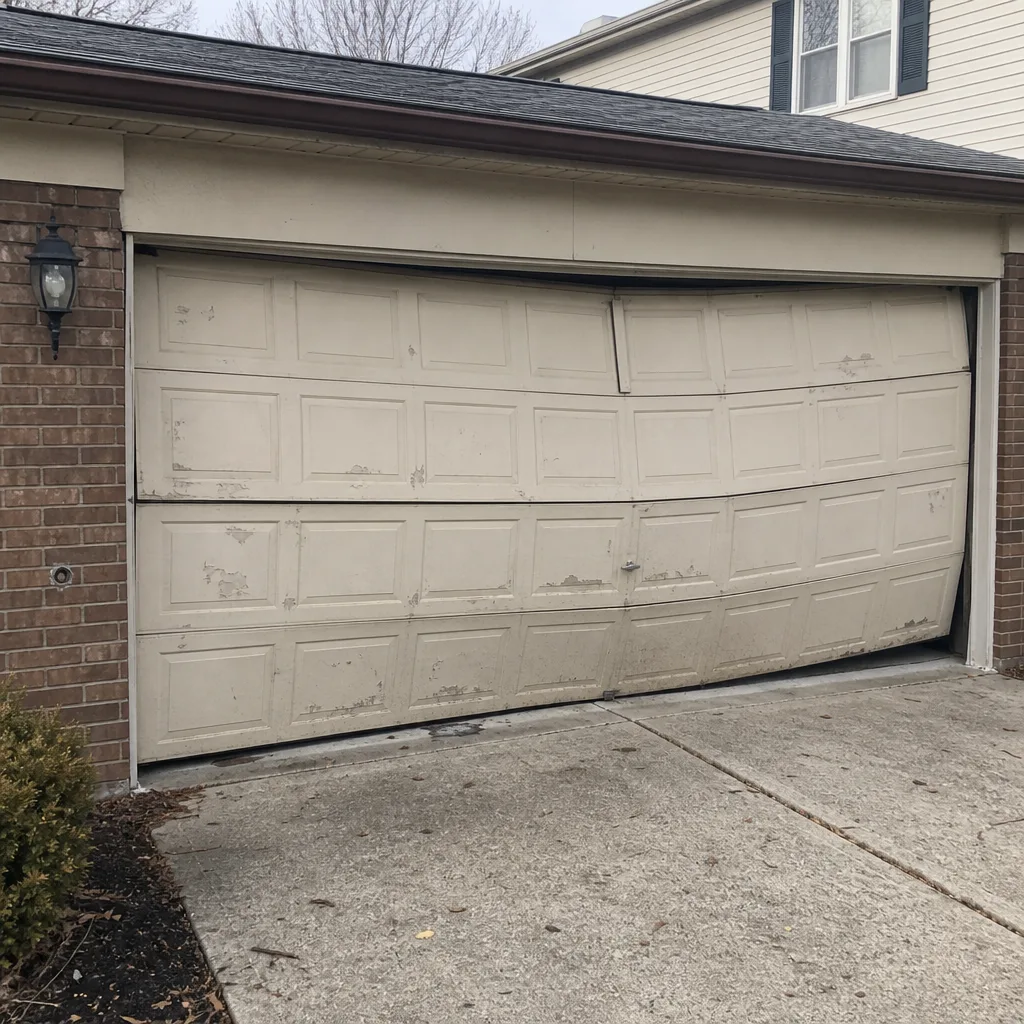 Before
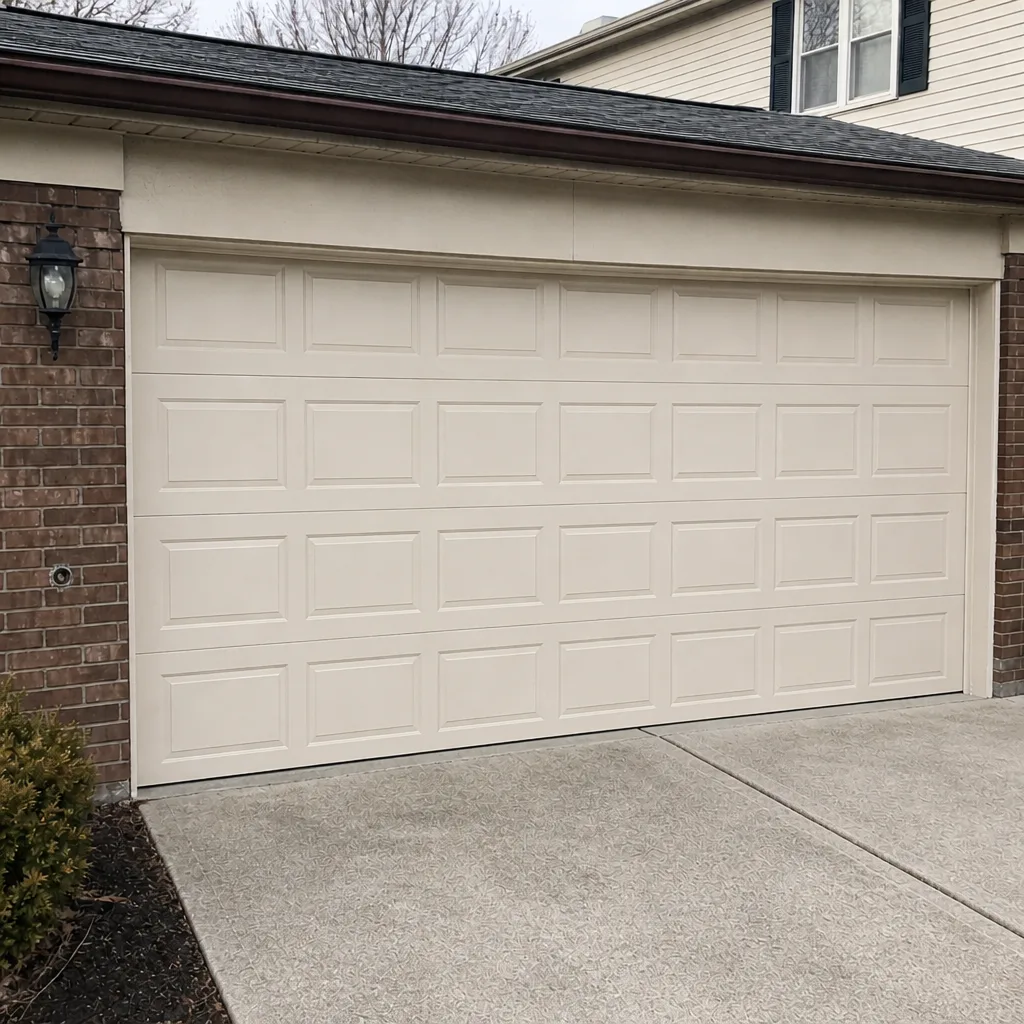 After
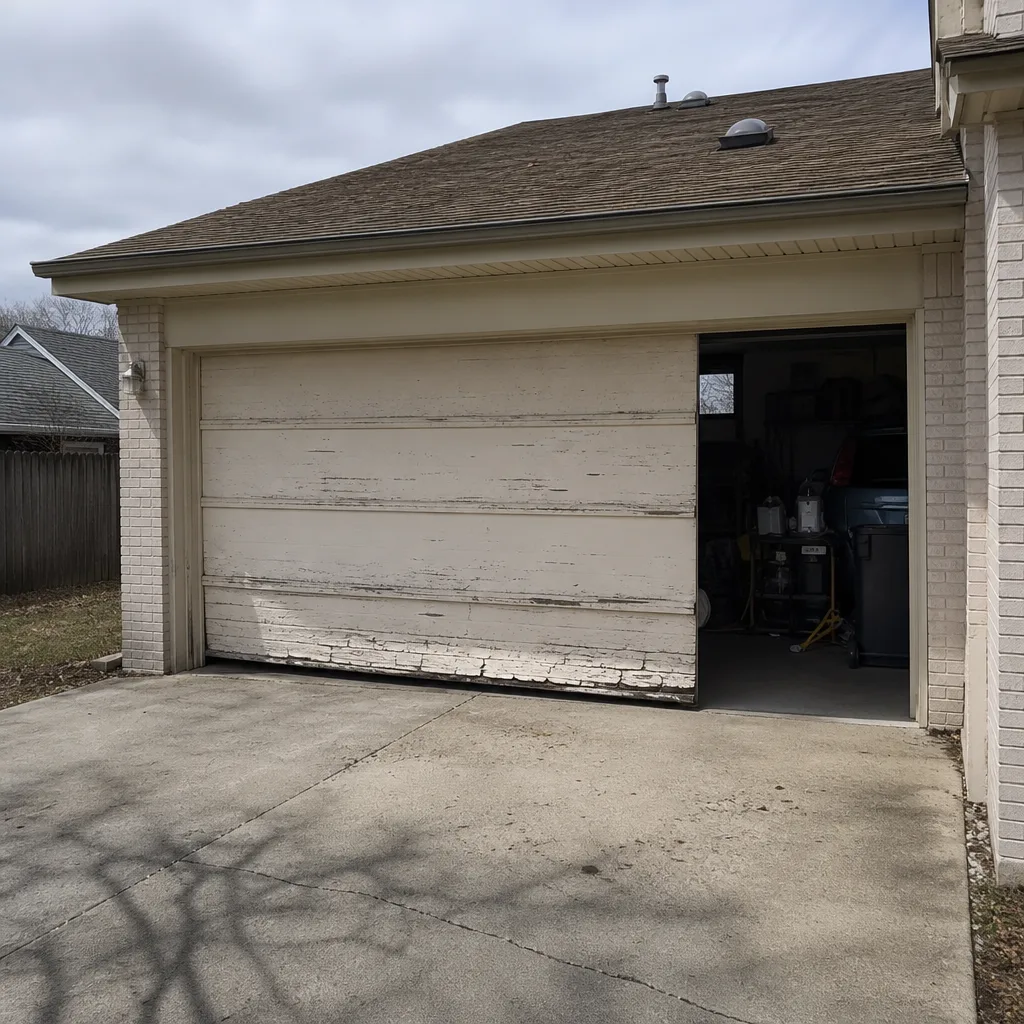 Before
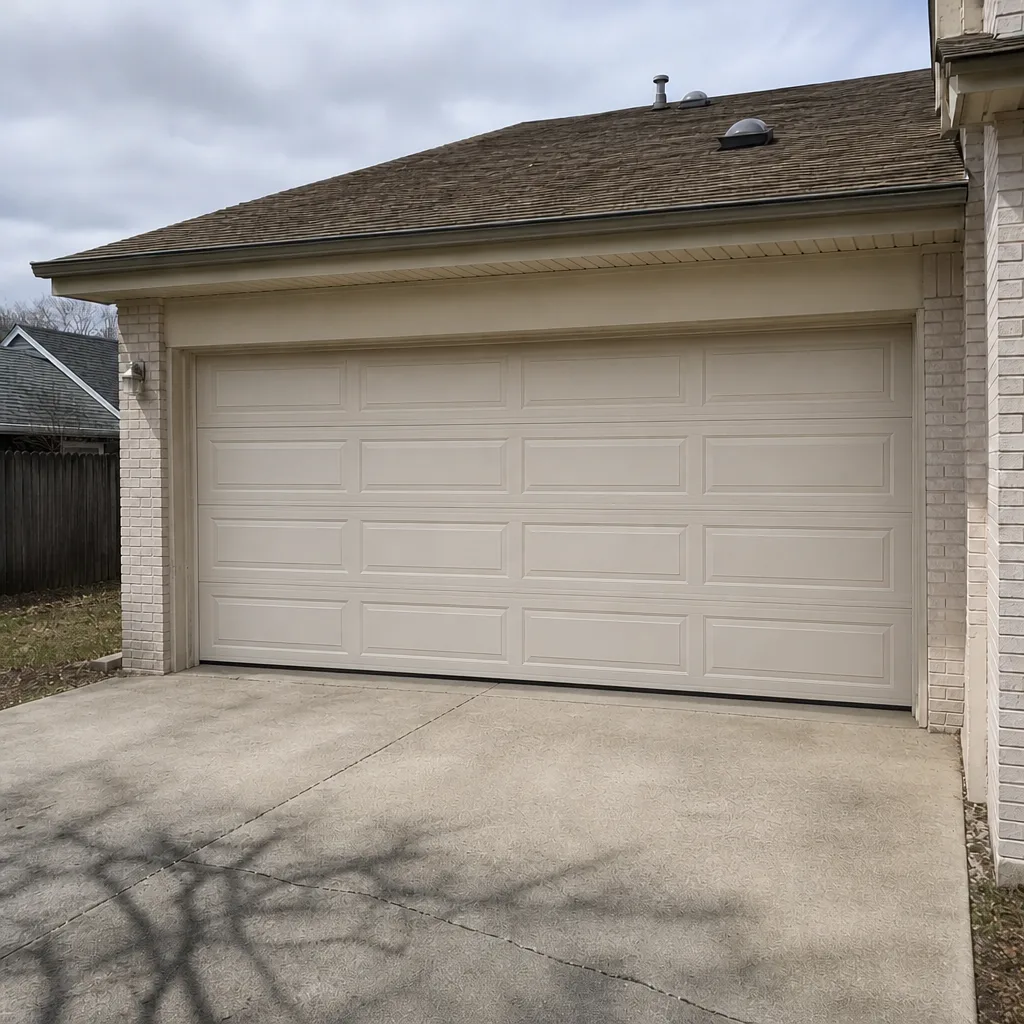 After
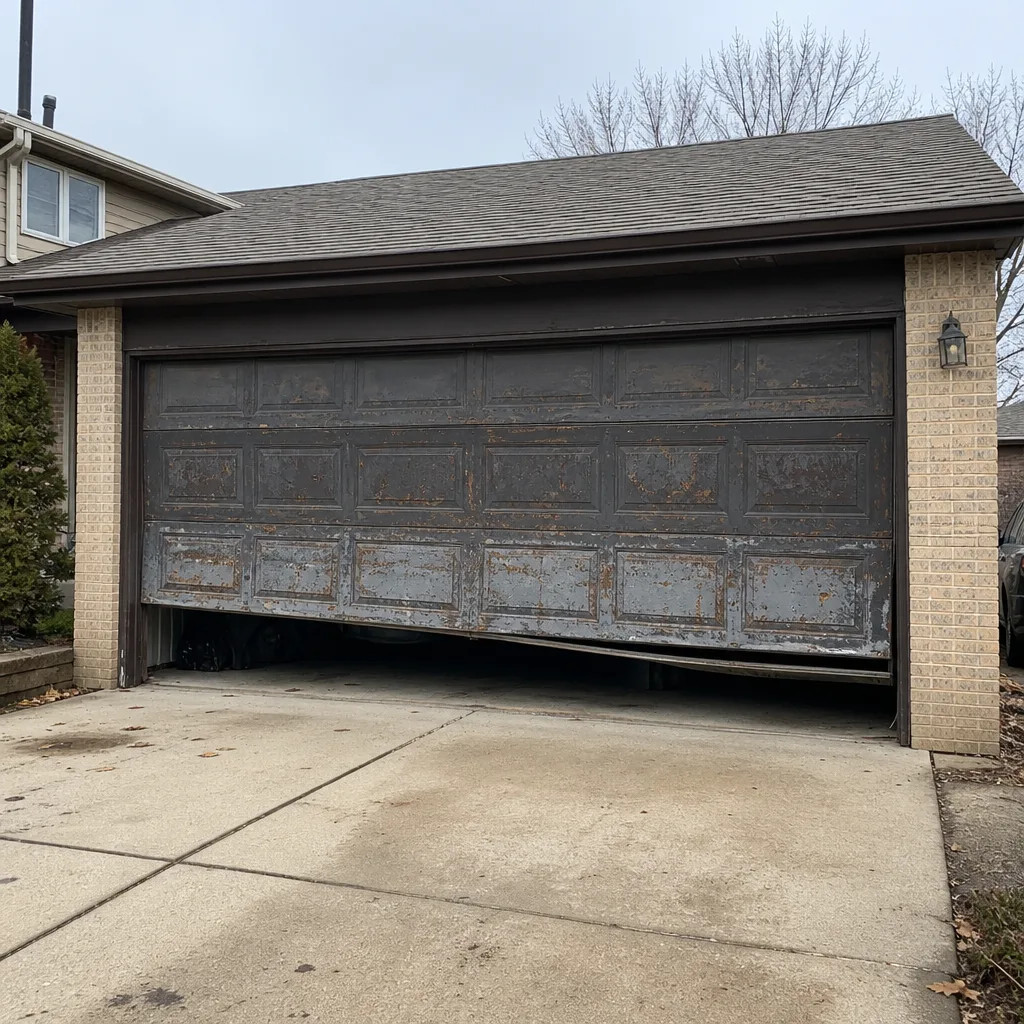 Before
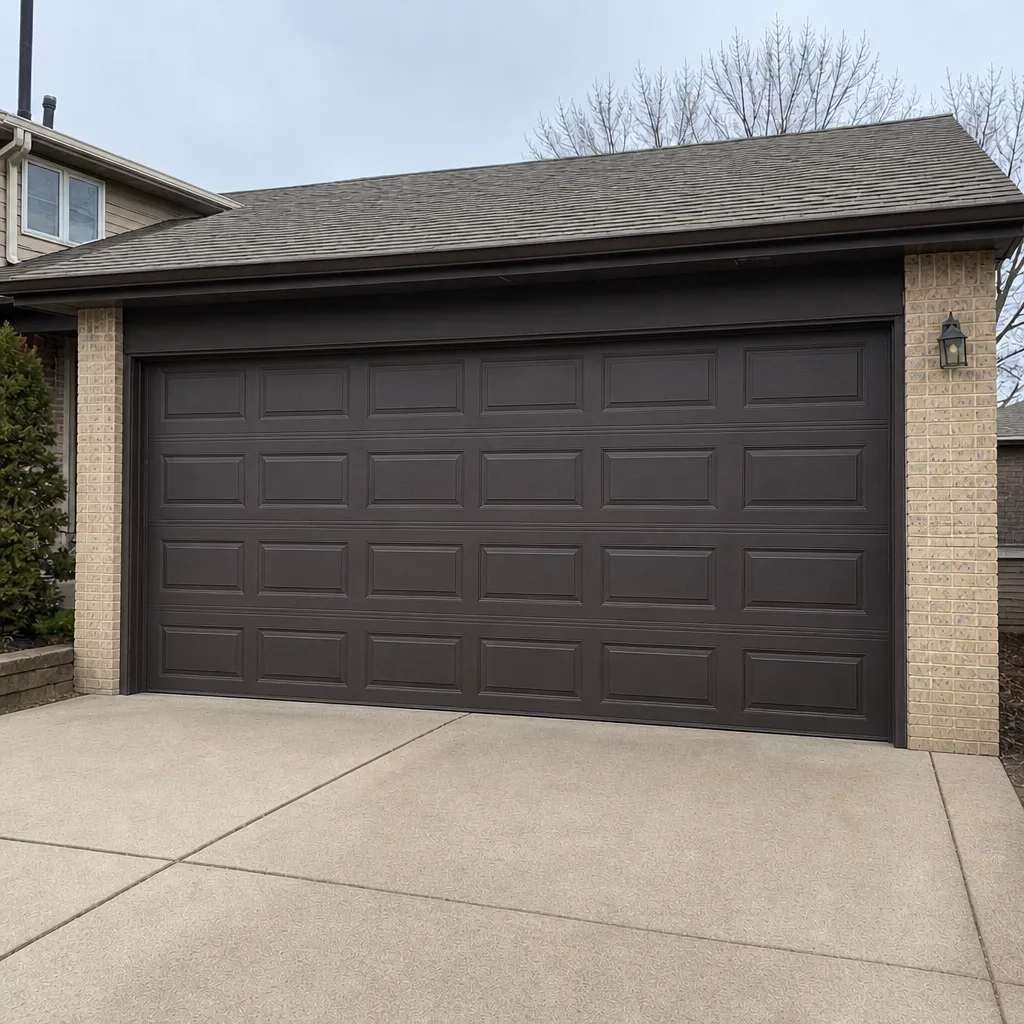 After
When to Call a Professional
Some garage door problems are safe to watch, and some aren’t. Call a professional right away if a spring has snapped (look for a gap in the coil or a door that won’t lift), if a cable is frayed or hanging, if the door has come off its track, if the door falls rather than lowers, or if the safety reverse stops working. These are safety situations, not maintenance items. Also call when a repair keeps coming back, when a door is noisy and getting worse, or when you’re unsure what you’re looking at. Our technicians have up to 13 years of experience reading exactly these symptoms, and an early call is almost always the cheaper path.
Orland Park Garage Door Repair offers free estimates in Orland Park, and same-day service for repair calls. Call (888) 569-6449 and we’ll help you sort out what your door needs. When the door won’t move, we do.
Frequently Asked Questions
Torsion springs typically last 7 to 12 years and extension springs 6 to 10 in Orland Park’s freeze-thaw climate, though a door used as the main household entry cycles more and wears its springs faster. Our winters accelerate metal fatigue and stiffen lubricant, which is why spring failure is the most common call we get. A seasonal visual check for gaps, rust, or stretched coils catches most failures before they happen. Call (888) 569-6449 for a spring evaluation; estimates are free.
Cosmetic problems are appearance-only and can wait; mechanical problems like noise, jerky travel, or a door that won’t stay up should be scheduled soon; safety problems like a broken spring, a frayed cable, or a door off its track mean stop using the door and call a professional. The triage matters because safety problems often look like mechanical ones, and running the door makes them worse. If you’re unsure which bucket your issue falls into, treat it as a safety problem and keep the door closed. Call (888) 569-6449 and we’ll help you identify it.
Clopay and Amarr doors are common on the steel doors across Orland Park’s subdivisions, Wayne Dalton shows up on many 1980s and 1990s homes, and Craftsman openers are widespread because they were builder-installed for decades. We also service LiftMaster, Chamberlain, Genie, and Raynor systems. Brand matters because parts availability and failure patterns are brand-specific. We work on the brand you already have, so you’re not pushed toward a replacement just because a generalist doesn’t recognize the system. Call (888) 569-6449 with your brand and we’ll tell you what we’re likely looking at.
Yes. Emergency garage door service is a core offering, and we handle same-day repair calls for doors that won’t open or won’t close. A door that’s stuck is often a safety or security concern, not just an inconvenience, so we treat those calls with priority. If the door won’t move because of a broken spring or a cable, keep the door closed and don’t force it. Call (888) 569-6449 and we’ll get a technician out to look at it.
Repair is usually the right call when the failure is isolated and the panels are sound; replacement makes more sense when multiple major components are failing at once or the panels are structurally compromised. A 20-year-old door with one broken spring is a repair. A door with rusted-through panels, bent tracks, and a failing opener is often a replacement conversation, especially on a 1970s or 1980s Orland Park home. We can quote either path after a diagnosis. Call (888) 569-6449 for a free estimate.
No. The written estimate is the price, and the work is quoted and agreed before anything starts. Garage door repair is priced per job based on the diagnosis, and we confirm the scope with you before we begin. The way to avoid surprises is to have the door looked at and the quote written down first. Call (888) 569-6449 for a free estimate and a clear price.
The Bottom Line
A garage door isn’t one product; it’s a system of springs, cables, tracks, rollers, panels, seals, and an opener, each with its own lifespan and its own failure pattern. In Orland Park, the freeze-thaw cycle and the village’s 1970s to 1990s housing stock shape which parts wear first and which door configurations you’re most likely to have. The useful habits are simple: know the difference between cosmetic, mechanical, and safety problems, run the five-minute seasonal inspection, and call a specialist when a spring, cable, or track is involved. Spring repair done right, brand-fluent diagnostics, and one call that covers the full job from emergency to installation are what a dedicated garage door specialist brings. Our technicians have up to 13 years of experience, and we’re here for the door that won’t move.
Orland Park Garage Door Repair is a garage door specialist, nothing else. For a free estimate in Orland Park, call (888) 569-6449. We’ll look at the whole system, tell you plainly what needs attention, and quote the work before it starts.
Written by the team at Orland Park Garage Door Repair.